Ace8 × Blockchain: Putting Prize Money on Chain, Transparently
Background
Ace8 is a well-known name in Taiwan's poker tournament scene. They're not running online games — they run real, physical events with actual people, cash, and tables. And it's exactly that "physical" side of things that's built up three long-standing pain points over the years.
Where the Problems Come From
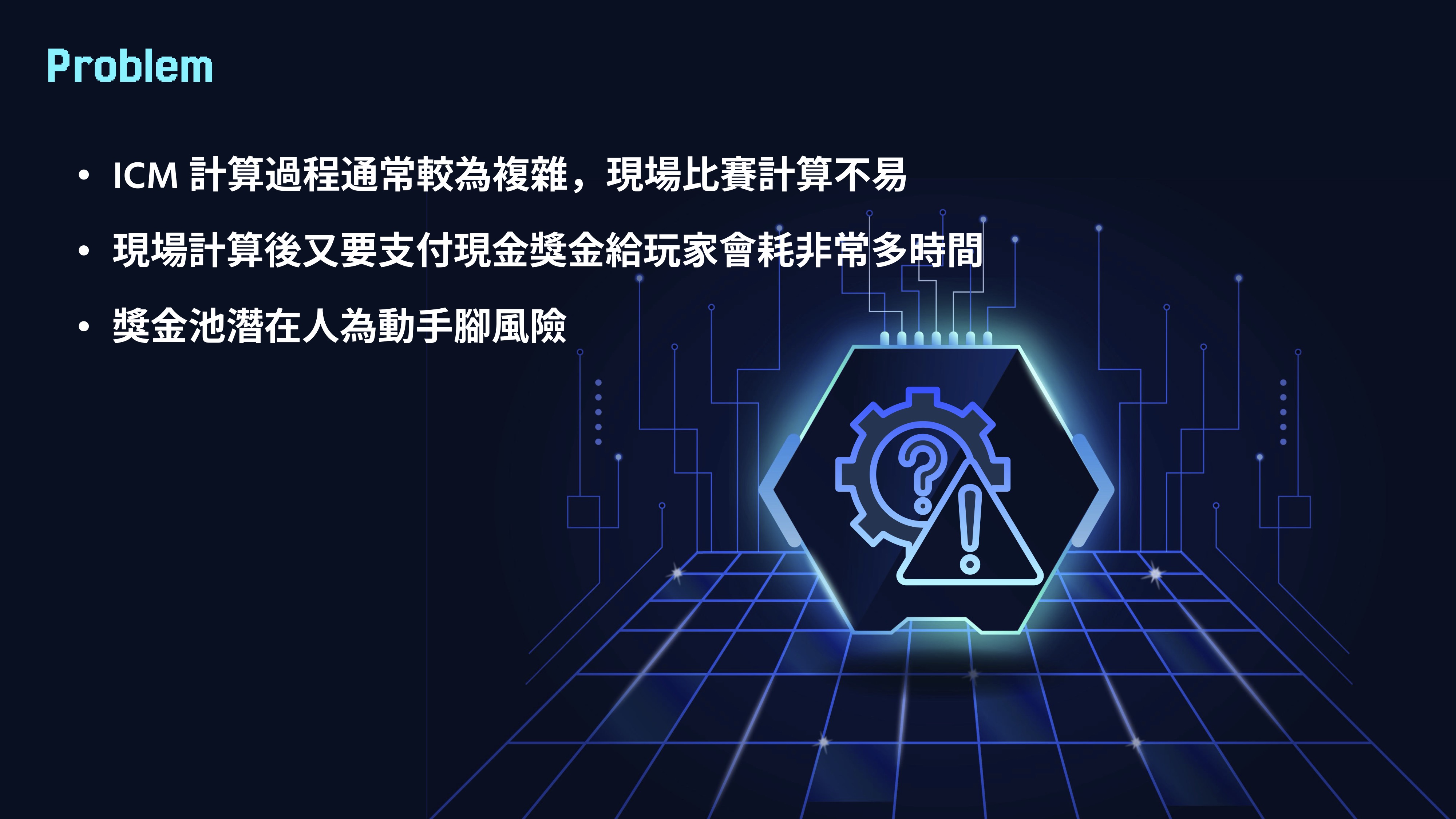
Every time a tournament wraps up, the staff has to deal with the same set of headaches:


ICM Calculation. When a tournament gets down to the last few players, prizes aren't simply handed out by finishing position — you have to run the Independent Chip Model based on each player's remaining chip stack to figure out everyone's fair expected value. The math itself isn't hard, but doing it by hand on the spot is error-prone and slow.
Prize Distribution. Once the numbers are done, you still have to count out the cash and hand it to each person one by one. The whole process can easily eat up an hour. For players who want to jump into the next game, that wait is genuinely draining.
The Trust Problem. The prize pool is held by the organizer, and players have no way to verify whether the amount is actually what it's supposed to be. It's the kind of concern that doesn't get talked about openly in smaller circuit events — but everyone kind of knows it's there.
The Logic Behind the Solution
When I first got involved with this project, the first question I asked was: "What do players actually need?"
The answer wasn't blockchain. It wasn't NFTs. The answer wasfast, accurate, and trustworthy.
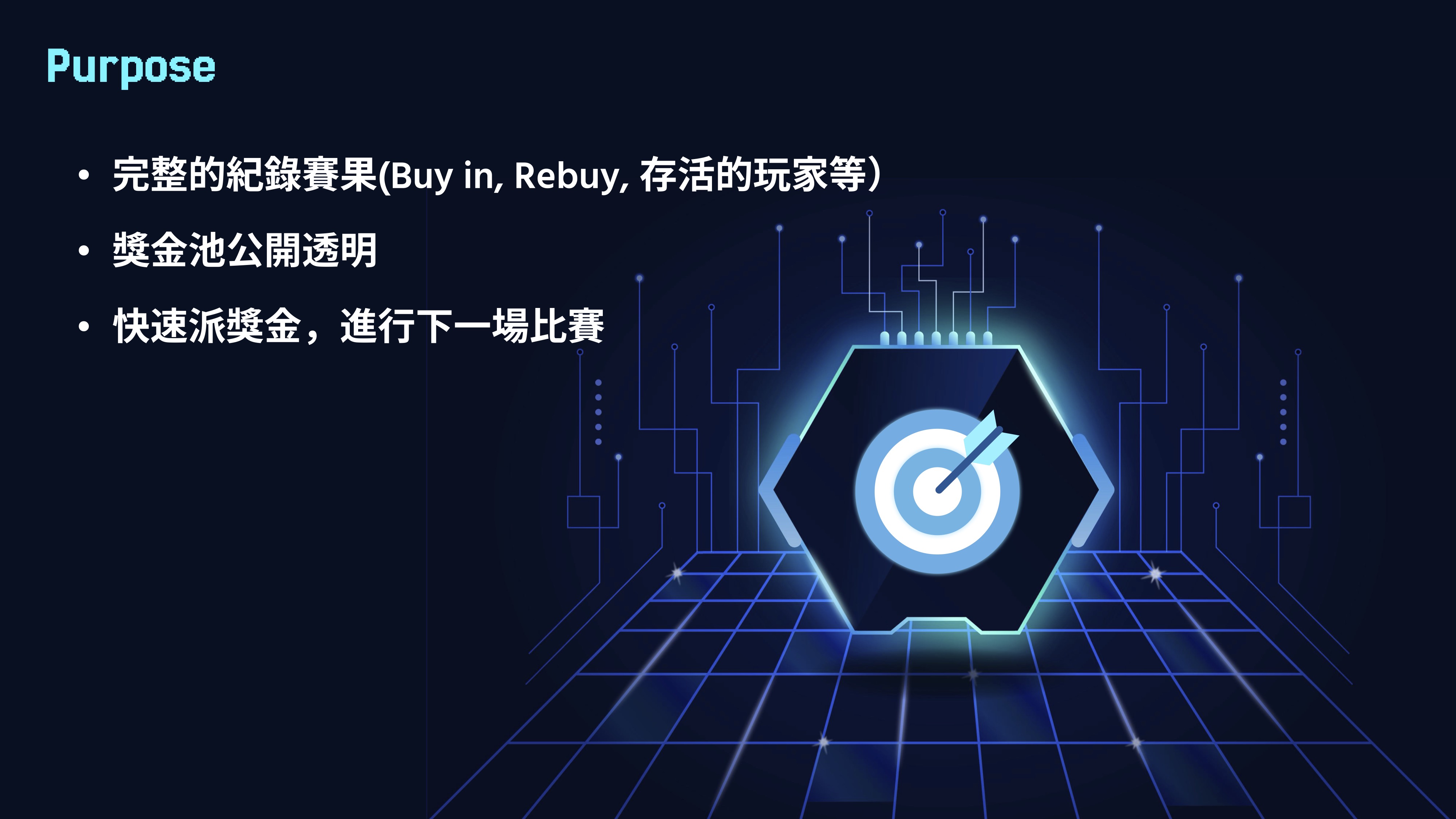
Blockchain's role here isn't a gimmick — it's a tool. It puts every movement of the prize pool on-chain where anyone can check it, lets ICM results directly trigger smart contracts for automatic payouts, and fundamentally eliminates that nagging feeling of "I have no idea if the money was touched or not."
What We Built
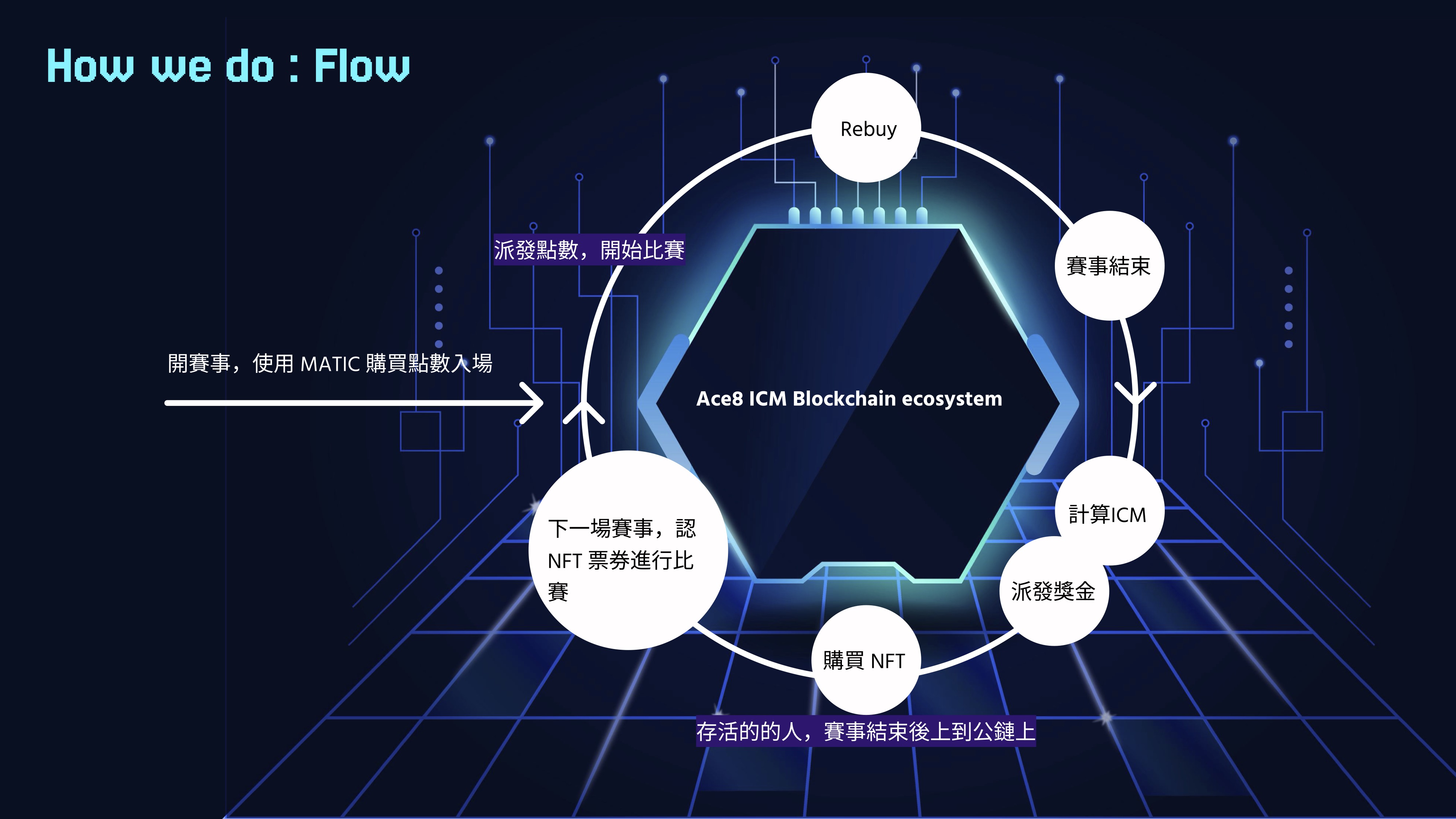
The whole system is designed around one closed loop:

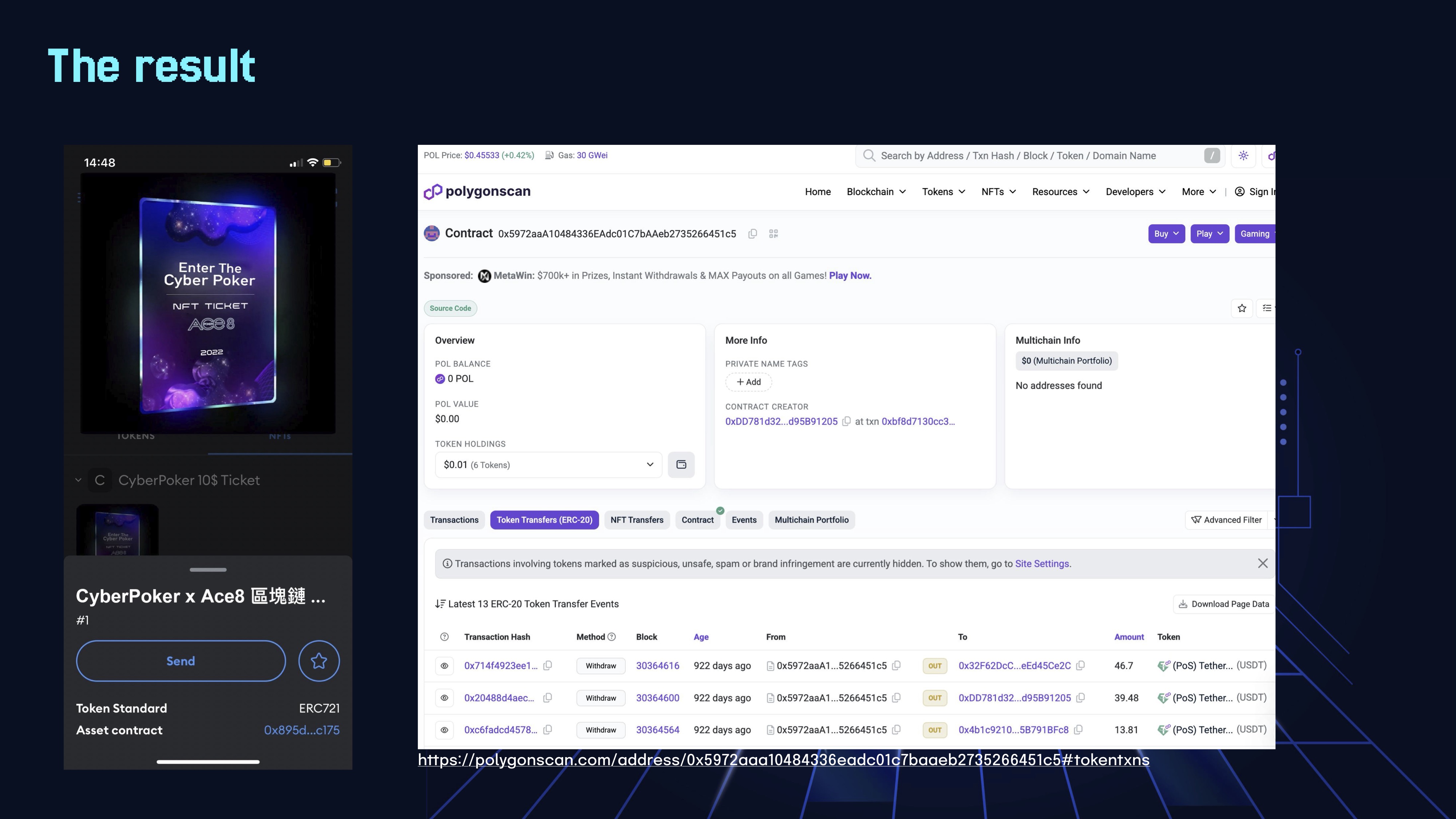
Players buy in using MATIC to purchase entry credits when they register; throughout the tournament, buy-ins and rebuys are all recorded on-chain; when the event ends, the system tallies surviving players' chip stacks, runs the ICM calculation automatically, and triggers payouts directly to each player's MetaMask wallet; the list of surviving players is synced to the public chain, so anyone can look it up.
On top of that, we minted an NFT ticket tied to the specific tournament for each surviving player — it works as an entry pass for the next event, and we collaborated with artists to give it real collectible value too.
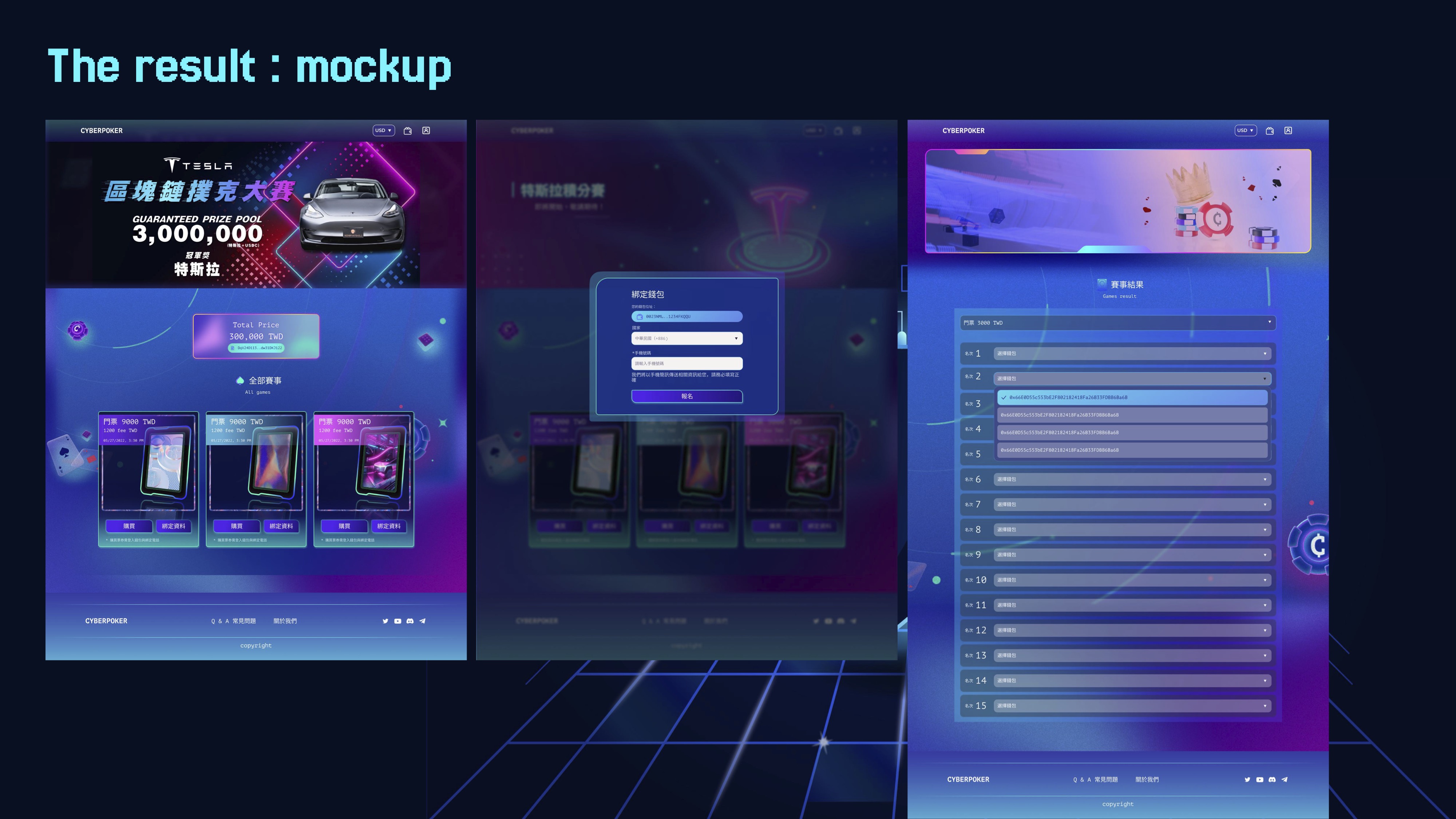
Features include: tournament management system, member KYC verification, MetaMask wallet linking, ICM calculation engine, automated payout contracts, and an NFT issuance mechanism.

Showroom