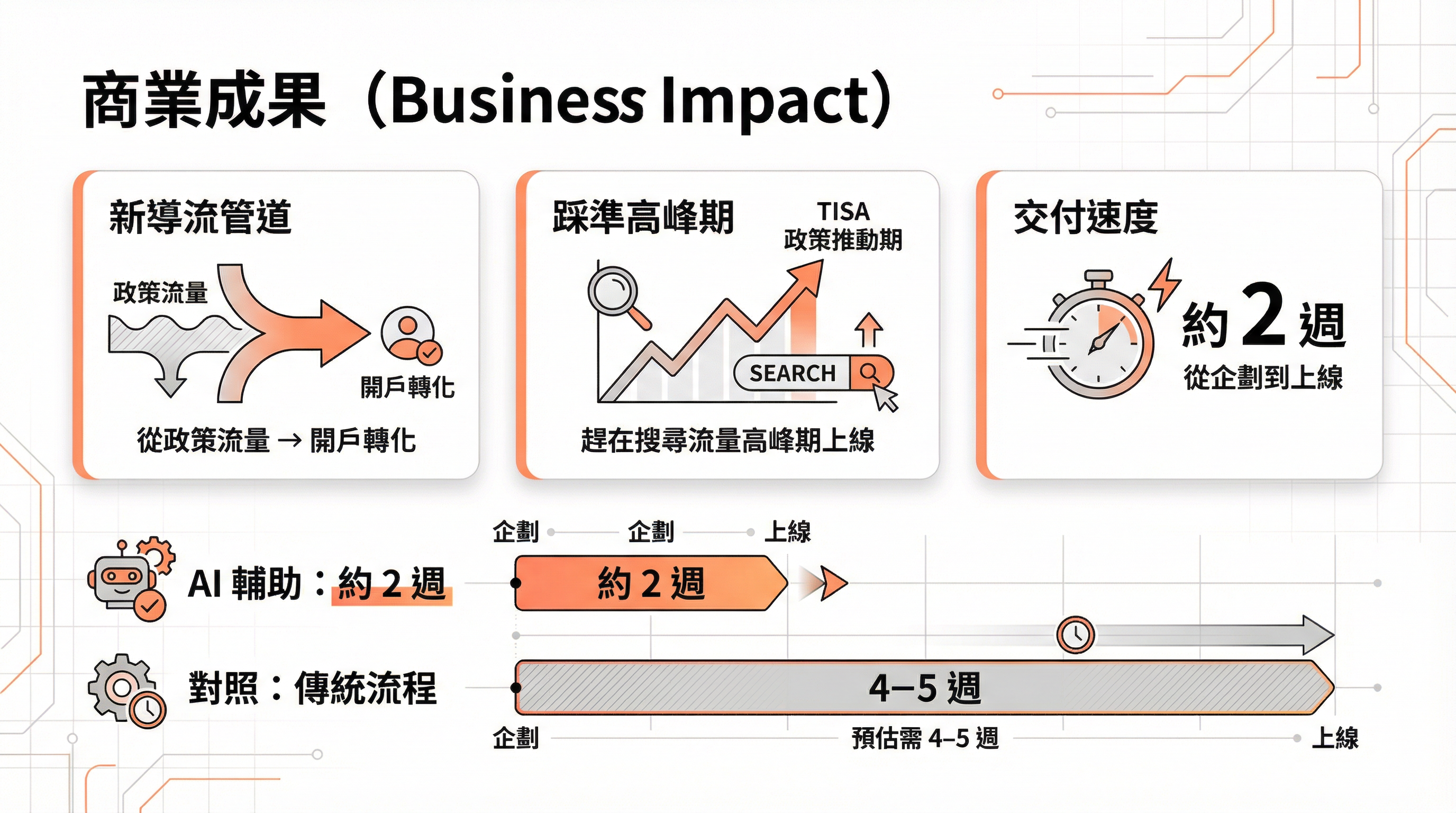
How do you quickly build a new user acquisition funnel when you're working with limited resources and a policy deadline breathing down your neck?
Project Background
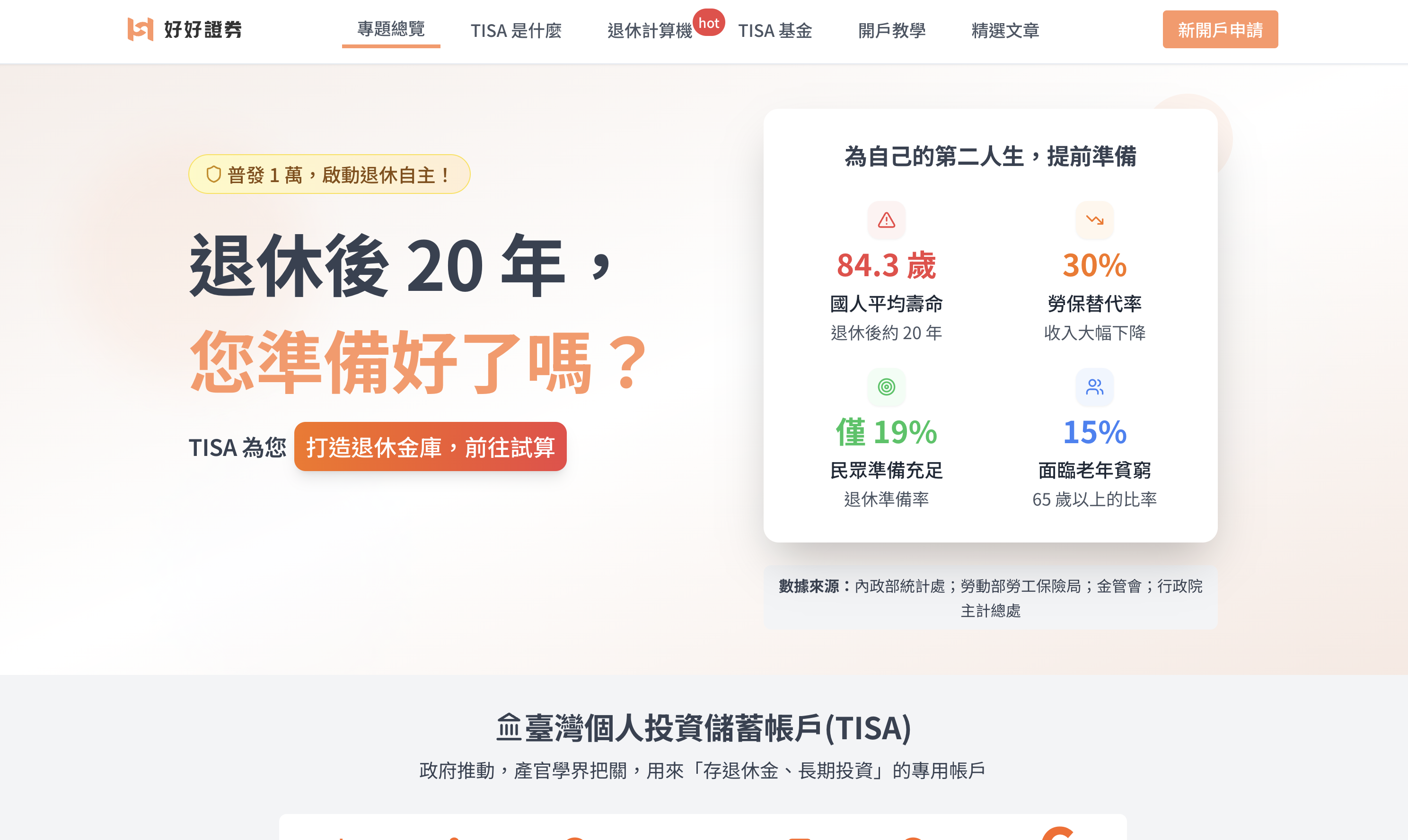
Taiwan Individual Savings Account (TISA) is a government-backed retirement incentive program. During its rollout, it drove a huge wave of first-time investors actively searching for information — and that was a critical window of opportunity for Haohao Securities to acquire new users.
But here's the reality: this was a small campaign project with limited dev resources, and the policy window wasn't going to wait around.
The real question wasn't "how do we build a great website" — it was "given the time crunch and budget constraints, what trade-offs are actually worth making?"
Key Decision #1: Using Vibe Coding Instead of the Traditional Dev Process
Campaign projects have a specific character: clear requirements, short lifespan, and high iteration frequency. With that in mind, I evaluated two possible paths:
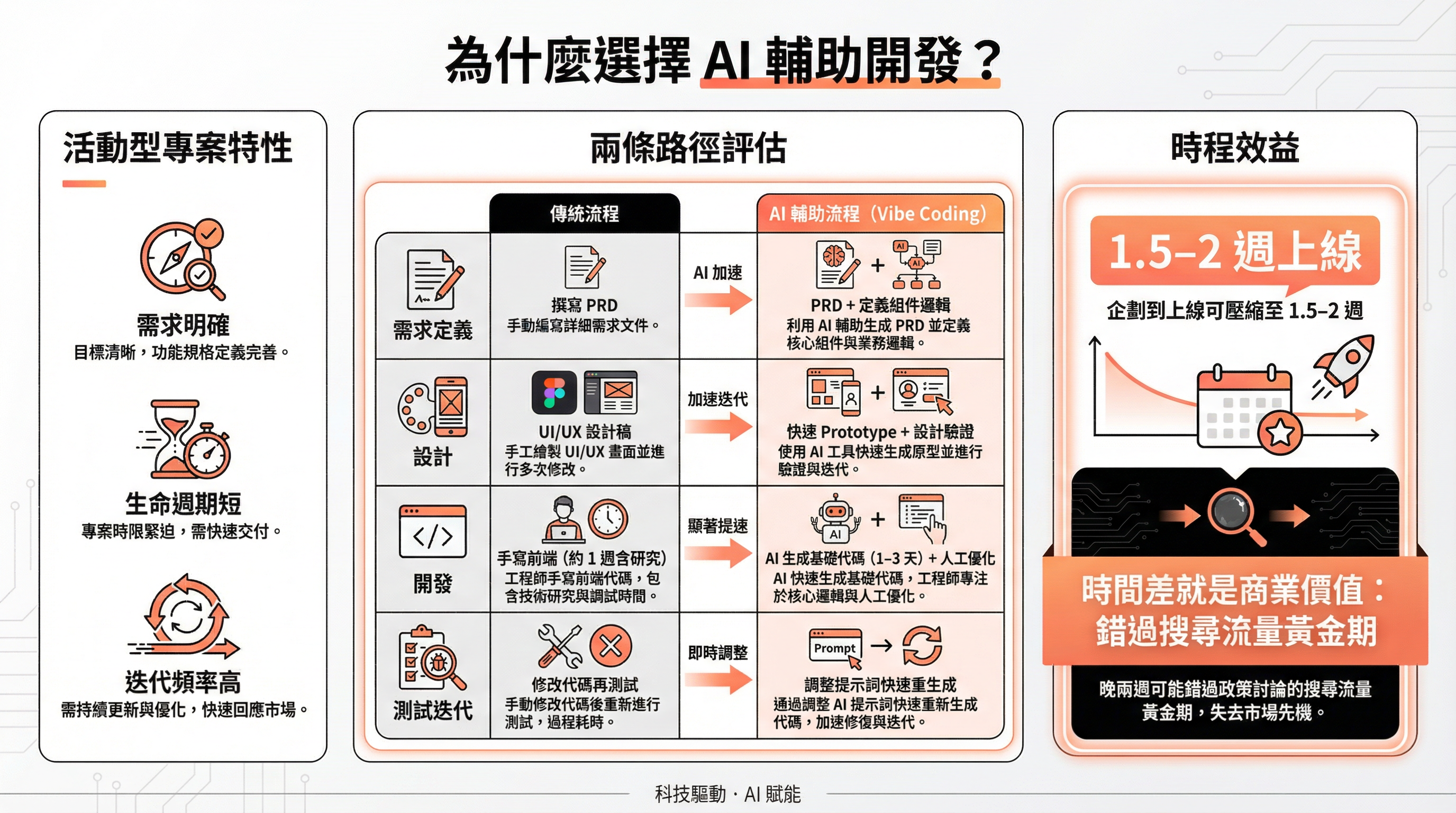
This comparison isn't saying the AI-assisted workflow is better in every single area — it's saying that for campaign-type projects specifically, it helped us hit a shippable quality bar in way less time. The real point isn't the tool itself; it's whether you clearly know what you should let AI handle and what you shouldn't.
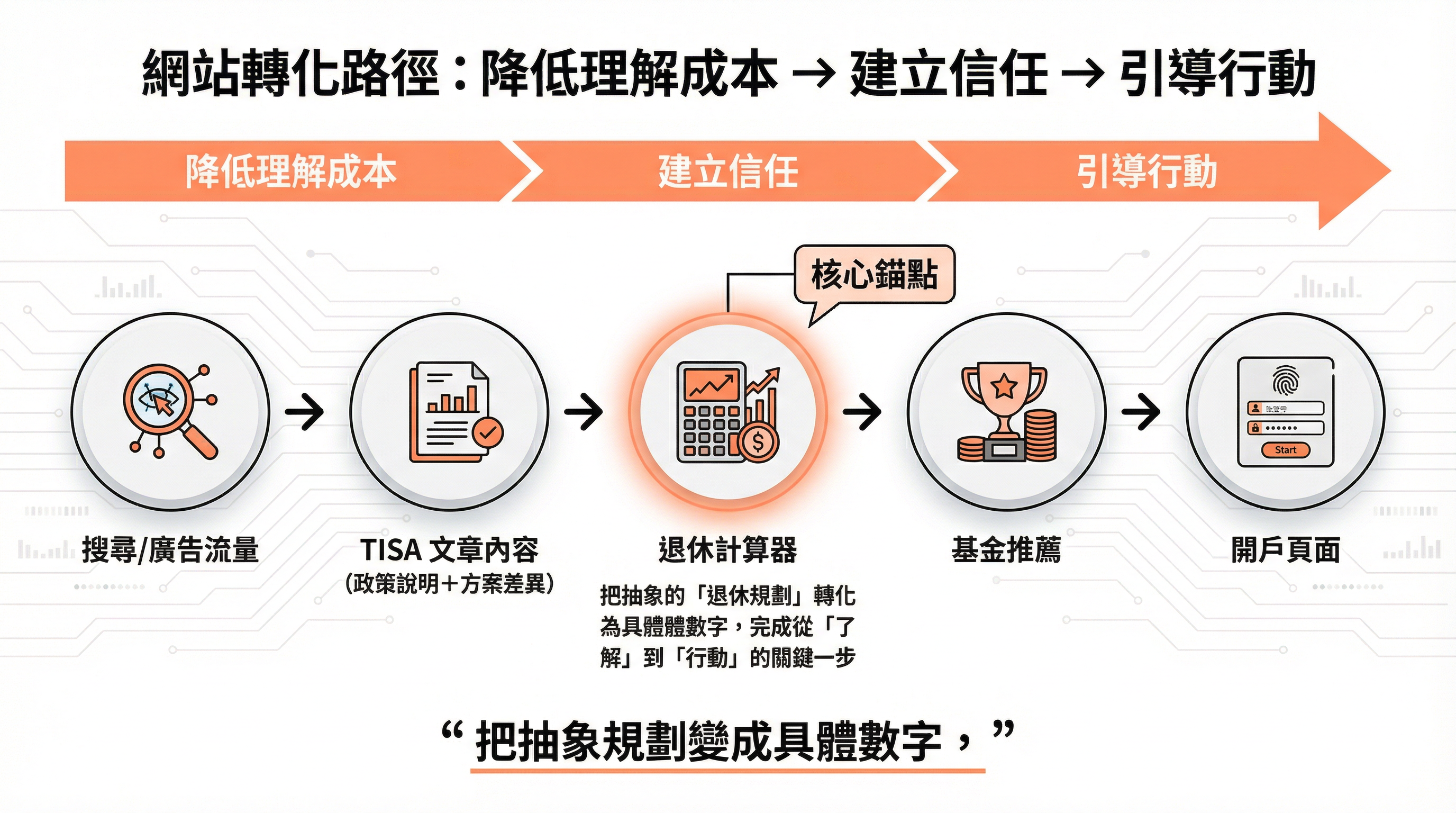
Key Decision #2: The Logic Behind the Conversion Path Design
Our target audience was people following the policy and newcomers to retirement planning. What they had in common: genuine interest, but a high decision-making threshold.
Key Decision #3: The Role of the Retirement Calculator
The calculator is the core anchor of this funnel. It helps users translate the abstract idea of "retirement planning" into concrete numbers — and that's the most critical step in moving someone from "I get it" to "I'm doing it."
Product Planning Showcase
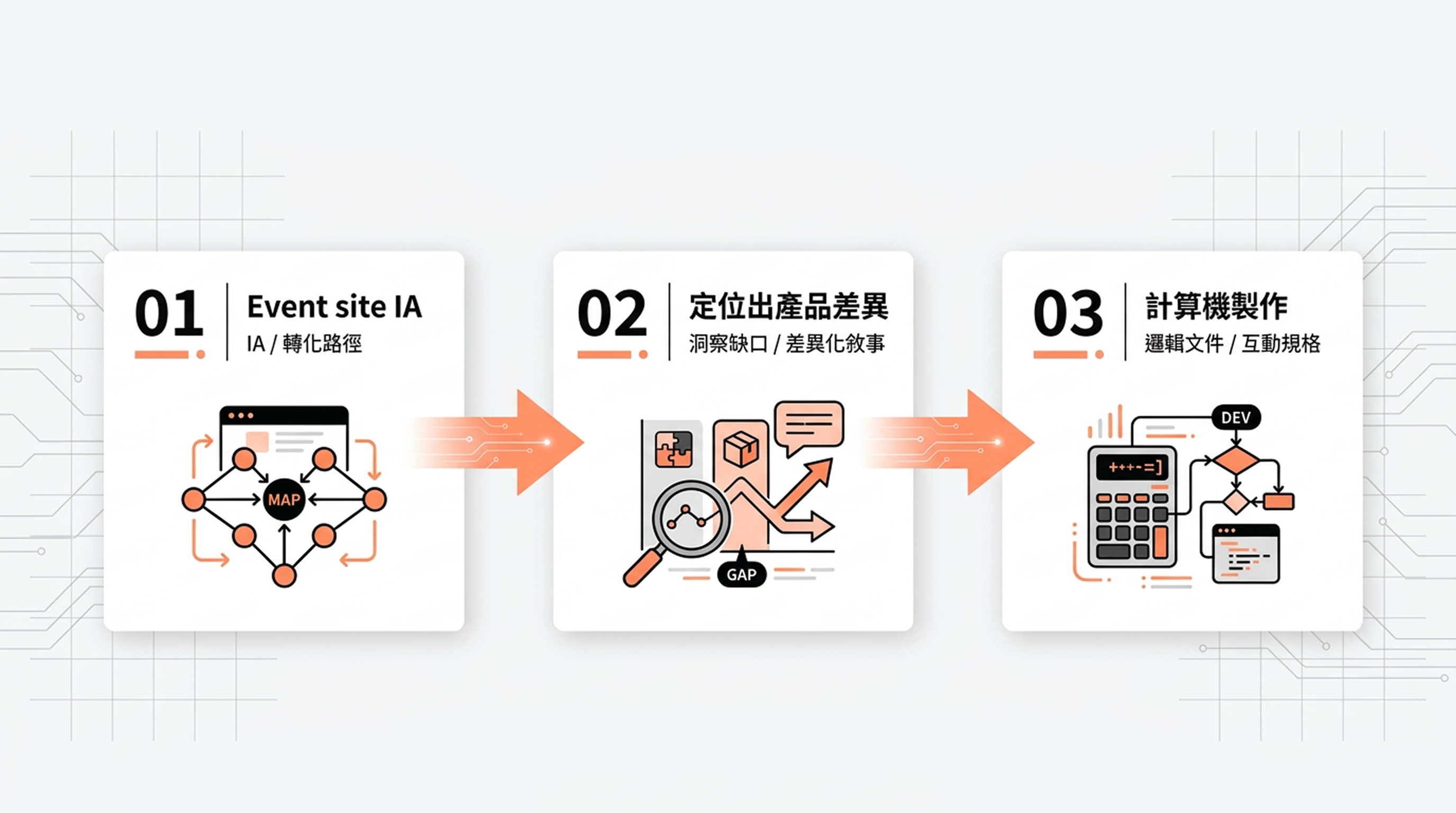
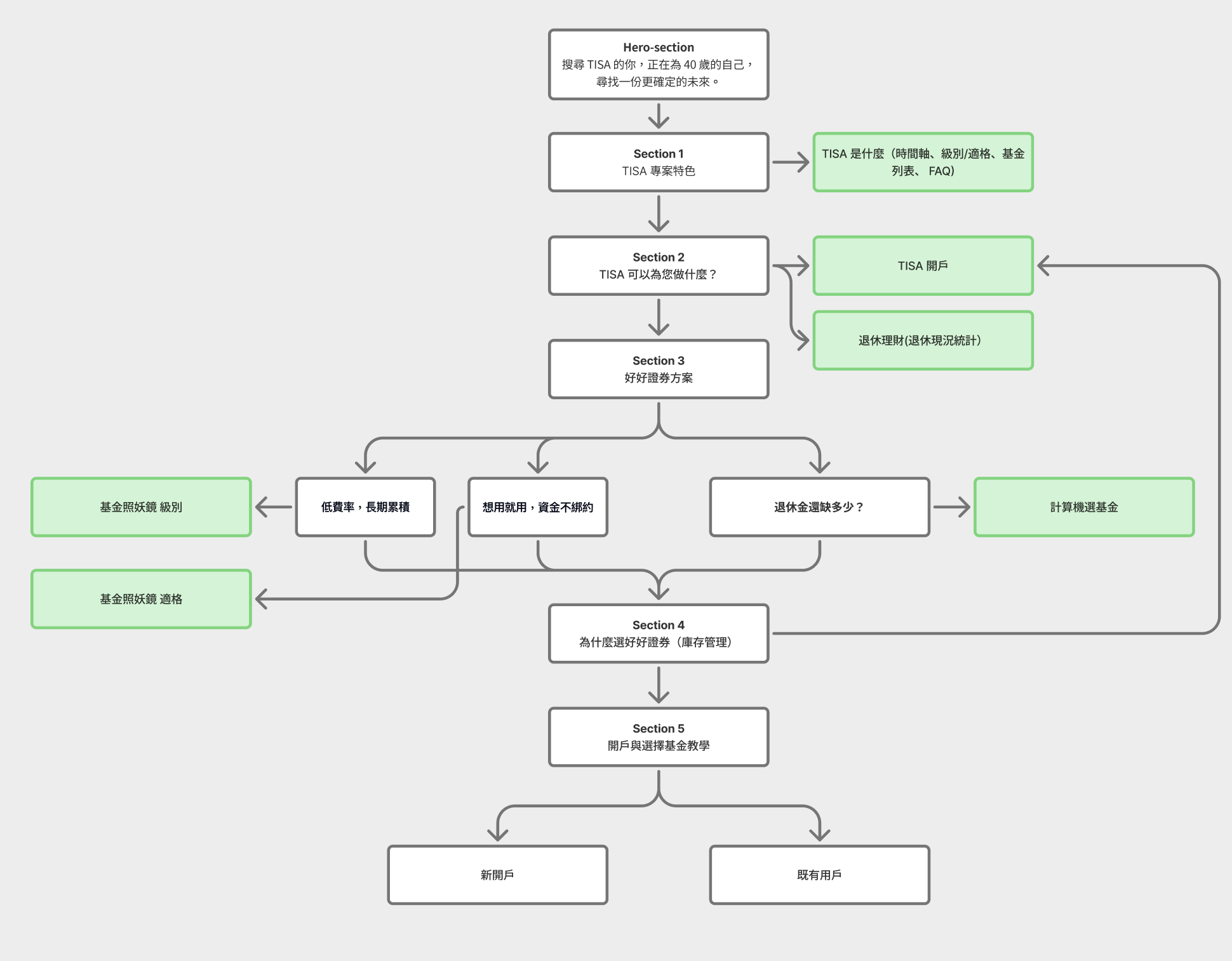
A full funnel breakdown from traffic entry point to account opening conversion.
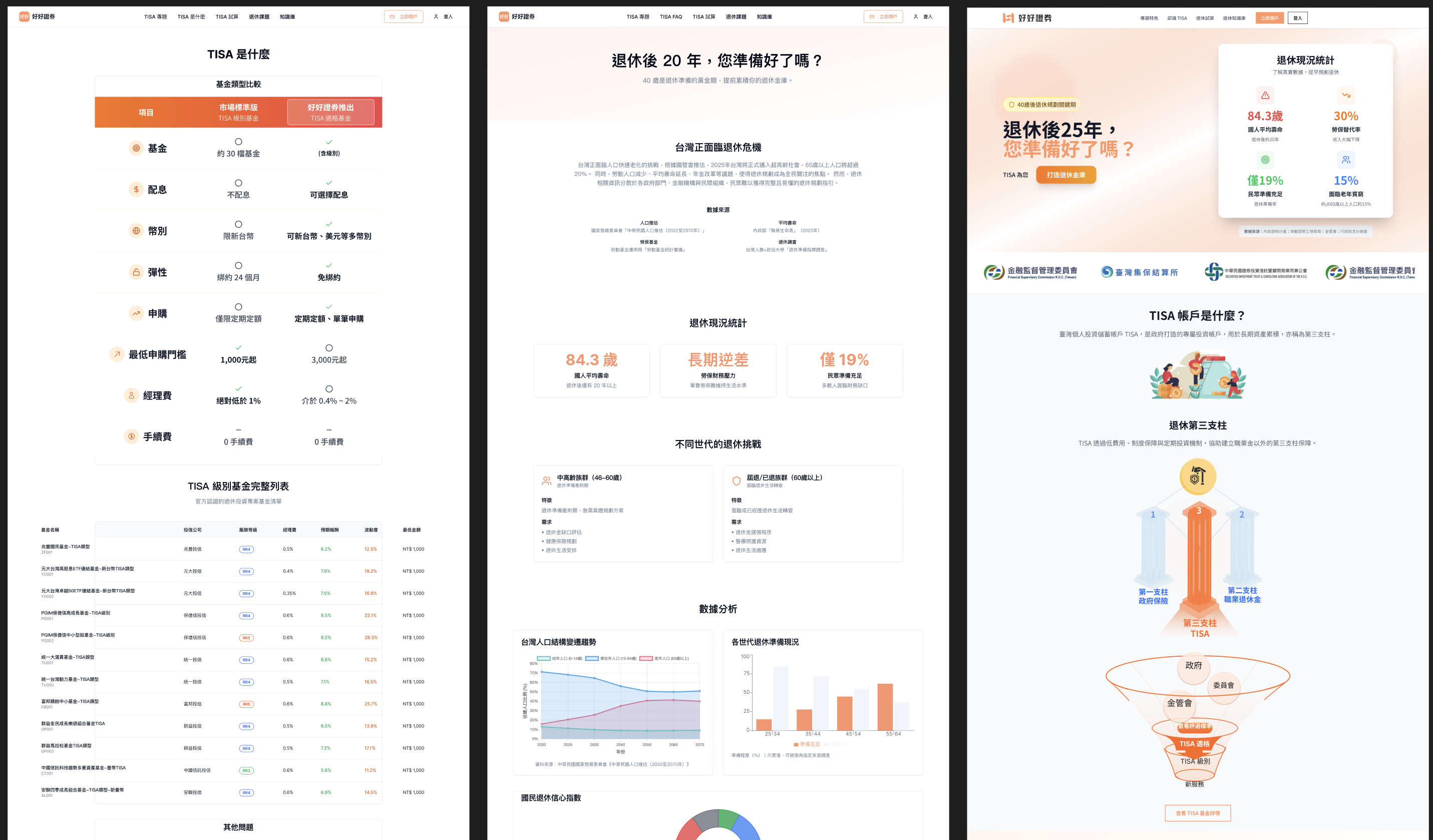
Multi-layout exploration for the TISA info page — the challenge was figuring out how to fit policy explanation, Haohao Securities' plan differences (TISA tier vs. TISA-eligible funds), and a clear visual flow guiding users toward the calculator, all on a single page.
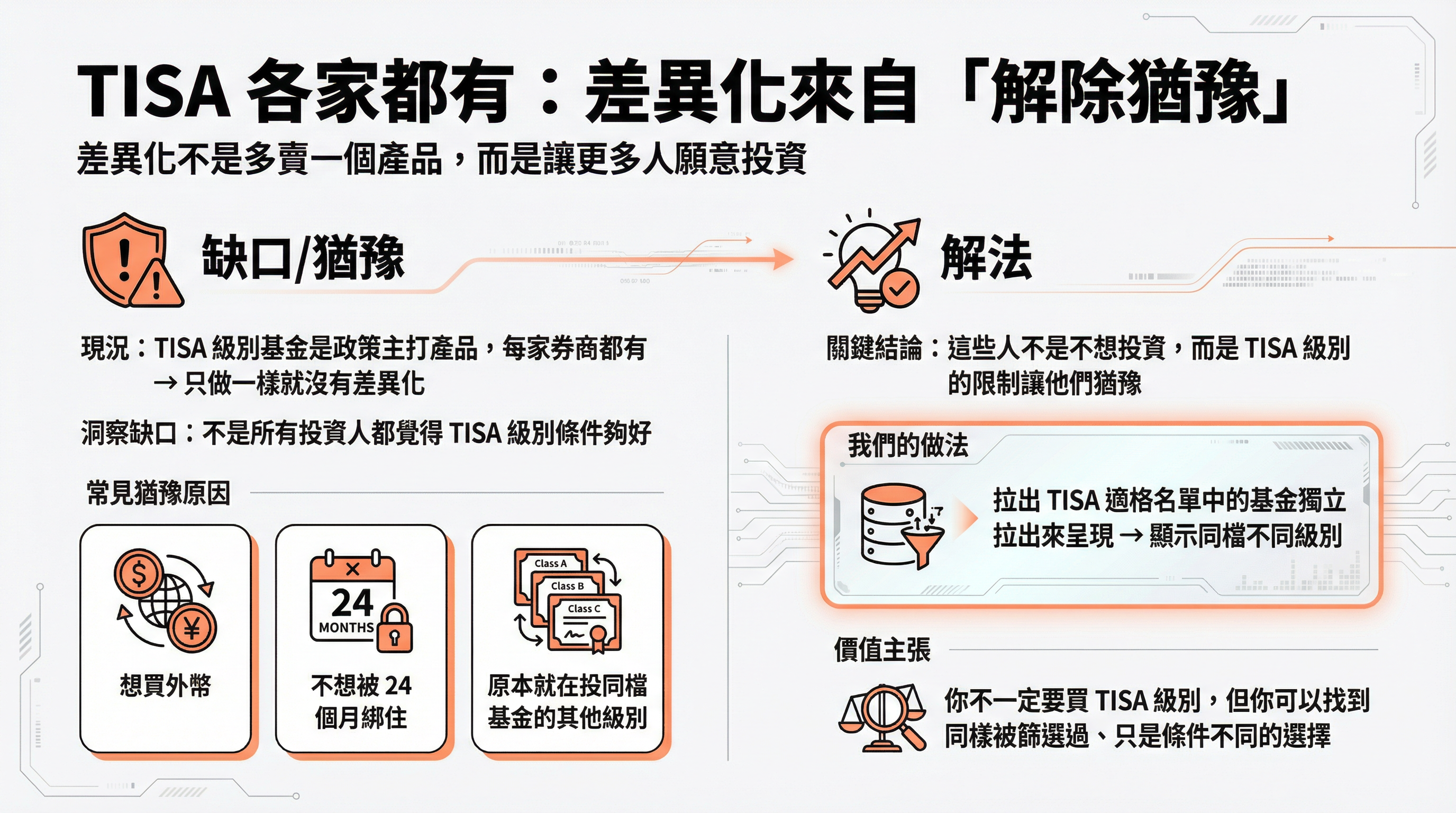
Core Product Decision: Why Break Out TISA-Eligible Funds as a Separate Section?
The Calculator's Logic
The retirement calculator needs to support two-way calculation: users can enter a monthly contribution amount to estimate their total retirement assets, or work backwards from a target amount to figure out how much they need to invest each month — with inflation adjustments built into both directions.
The technical part isn't that hard. The tricky part ischoosing the right assumptions. Retirement calculators on the market vary a lot in how they handle "expected return rate" — different tools can give you results that differ by hundreds of thousands of dollars. To make sure Haohao Securities' calculation logic was traceable and defensible, I used reverse engineering — running binary search-style behavioral analysis on mainstream calculator tools to work backwards and figure out the implied assumptions and model boundaries that the industry was using.
This process confirmed that the industry generally usesnominal return ratesrather than real return rates. We ultimately went with the nominal method as the core logic for this calculator. This decision matters not just because it "calculates correctly" — it matters because every assumption can be clearly explained. When a user or the compliance team questions where a number comes from, there's a full derivation path we can point to.
Interface planning for the two-way calculation scenarios — including how to handle input mode switching, how to present the inflation adjustment explanation, and how to make the "today's purchasing power equivalent" concept visually intuitive on the results page.
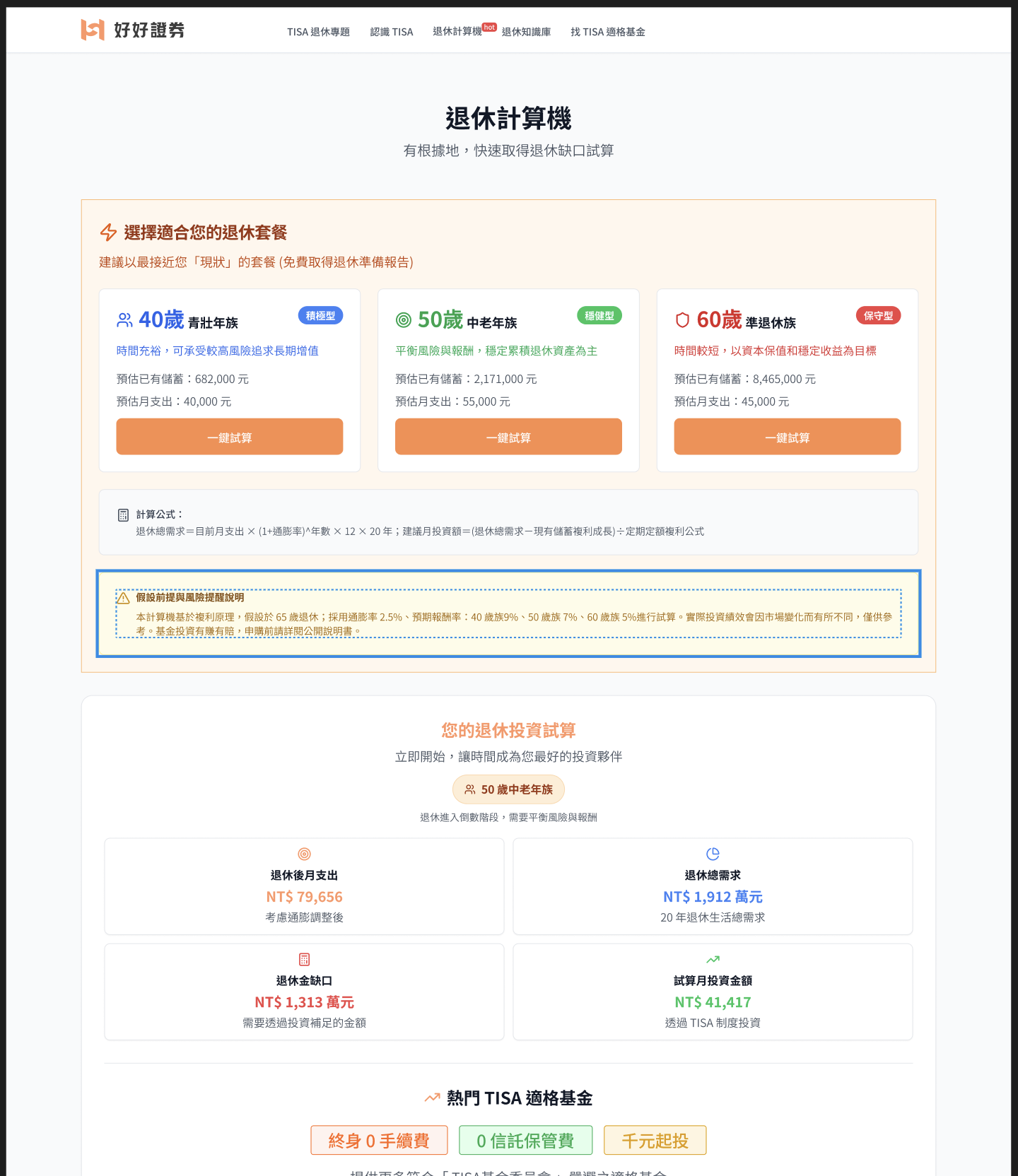
The retirement calculator is the core conversion tool in this funnel:
- It helps users turn the abstract idea of "retirement planning" into something concrete and numerical.
- It supports two-way calculation: enter a monthly contribution to estimate total retirement assets, or work backwards from a target amount to find the required monthly investment — with inflation adjustments in both directions.
The goal is simple: let users figure out "how much do I need to invest each month" within 30 seconds, then flow directly into fund recommendations and account opening.
The calculator isn't a financial education tool — it's a conversion accelerator.
Methodology Reflections
Looking back, the decision to go with AI-assisted development was the right call — but the process also surfaced a few areas where we need to establish clearer standards.
AI-generated code still needs human intervention for accessibility and performance optimization. Complex interaction logic — like the calculator's two-way computation — can't be delegated to generation; it actually requires cleaner, more thorough logic documentation upfront. This made me realize that the value you get from AI-assisted development depends heavily on the quality of your pre-planning. The clearer your component logic is defined going in, the closer the generated output is to something you can actually use.
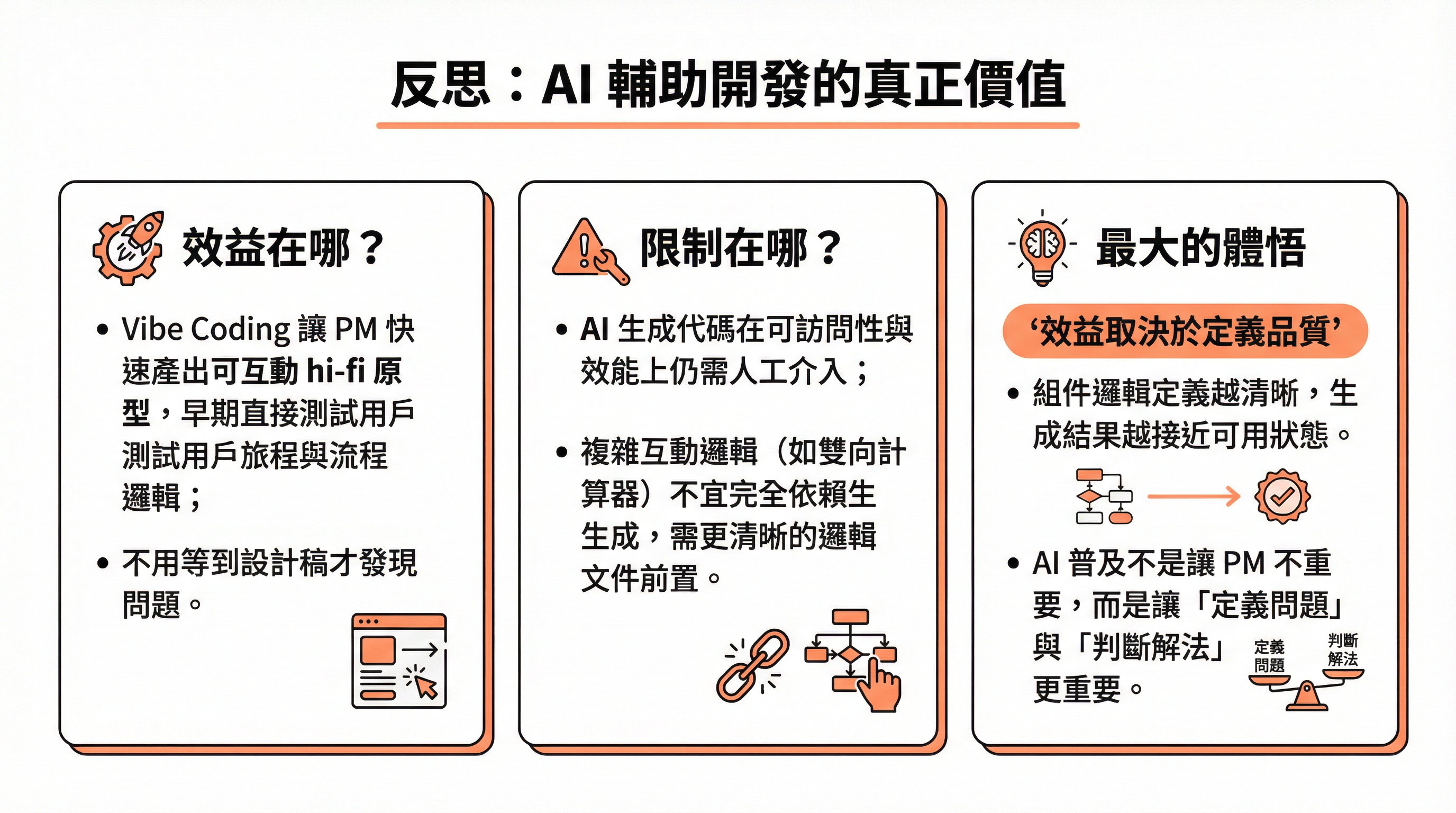
In this workflow, Vibe Coding's role wasn't to replace the designer or engineer — it was to let the PM quickly produce an interactive hi-fi prototype.With an interface that's close to the real thing, you can test whether the user journey and CTA logic actually hold up early on — instead of waiting until the design mockup stage to discover flow problems. Once things are settled at this stage, you hand it off to the designer to polish the UI details and the engineer to do structural refactoring. The division of labor actually becomes clearer, not more blurry.
This whole experience also gave me a fresh perspective on what it means to be a PM. When AI can quickly turn ideas into interactive interfaces, a PM who also has UX knowledge can make quality judgment calls right at the prototype stage — instead of waiting until after handoff to the designer to start the feedback loop. Product thinking and UX knowledge aren't two separate skills anymore; they need to be integrated in the same person — someone who knows how to define the problem and also knows how to judge whether a solution actually works well. That's probably the most valuable compound skill a PM can develop in the age of AI tools.
Results