Kokomo Mental Health Platform: User Research & Product Design
Exploring the possibilities of B2B2C online therapy matching and AI-assisted conversations
I. Project Background: Mental Health Crisis During the Pandemic
Current State of Mental Health in Taiwan
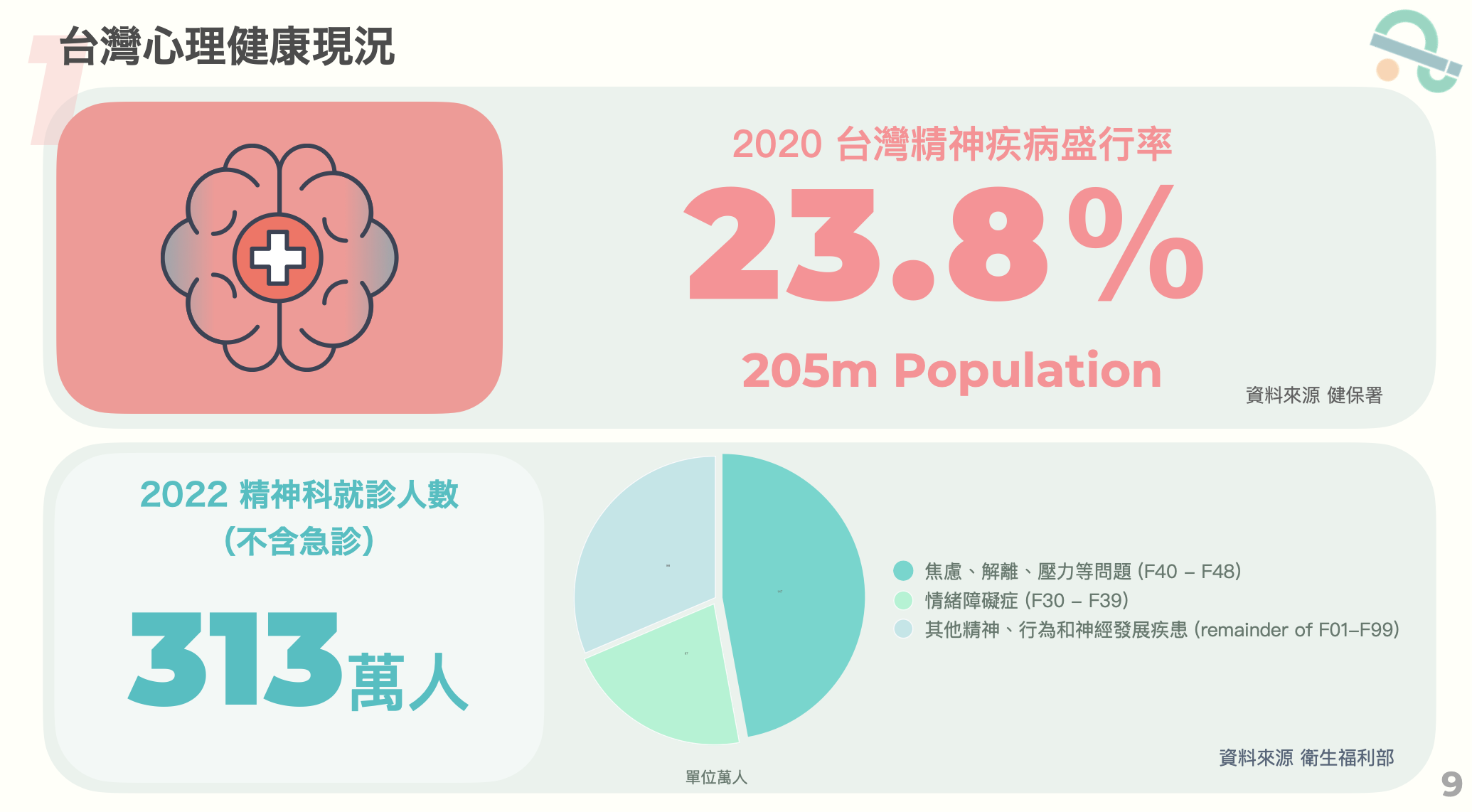
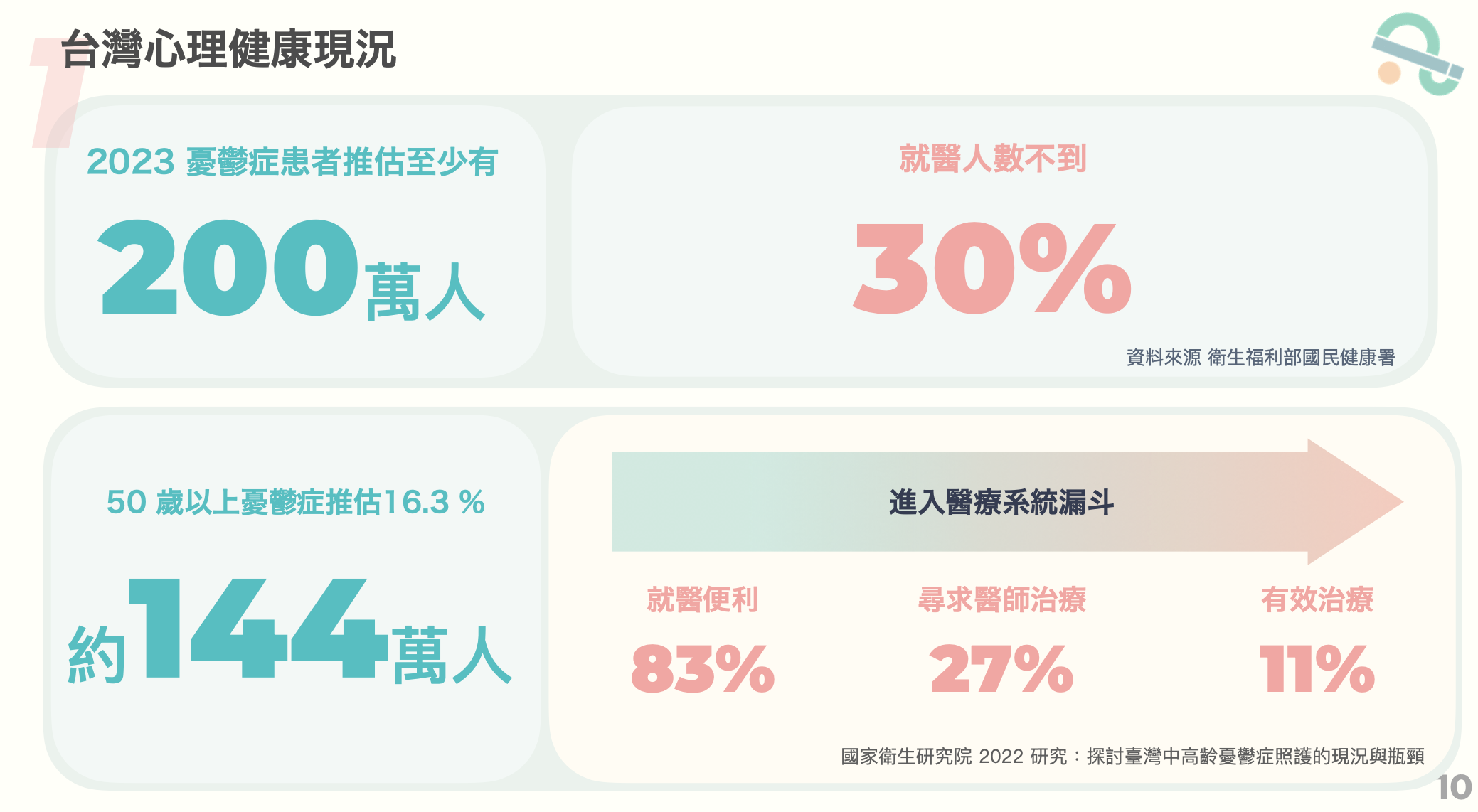
An estimated 2+ million people in Taiwan suffer from depression, yet fewer than 30% seek medical help. According to a 2022 National Health Research Institutes study, even though 83% consider healthcare accessible, only 27% actually seek physician treatment, with only 11% ultimately receiving effective treatment. Depression prevalence among those 50+ is estimated at 16.3% (~1.44 million). These numbers reveal a long-standing reality: there is a massive gap between the accessibility and actual utilization of professional psychological counseling services.
Help-Seeking Barriers Among Youth
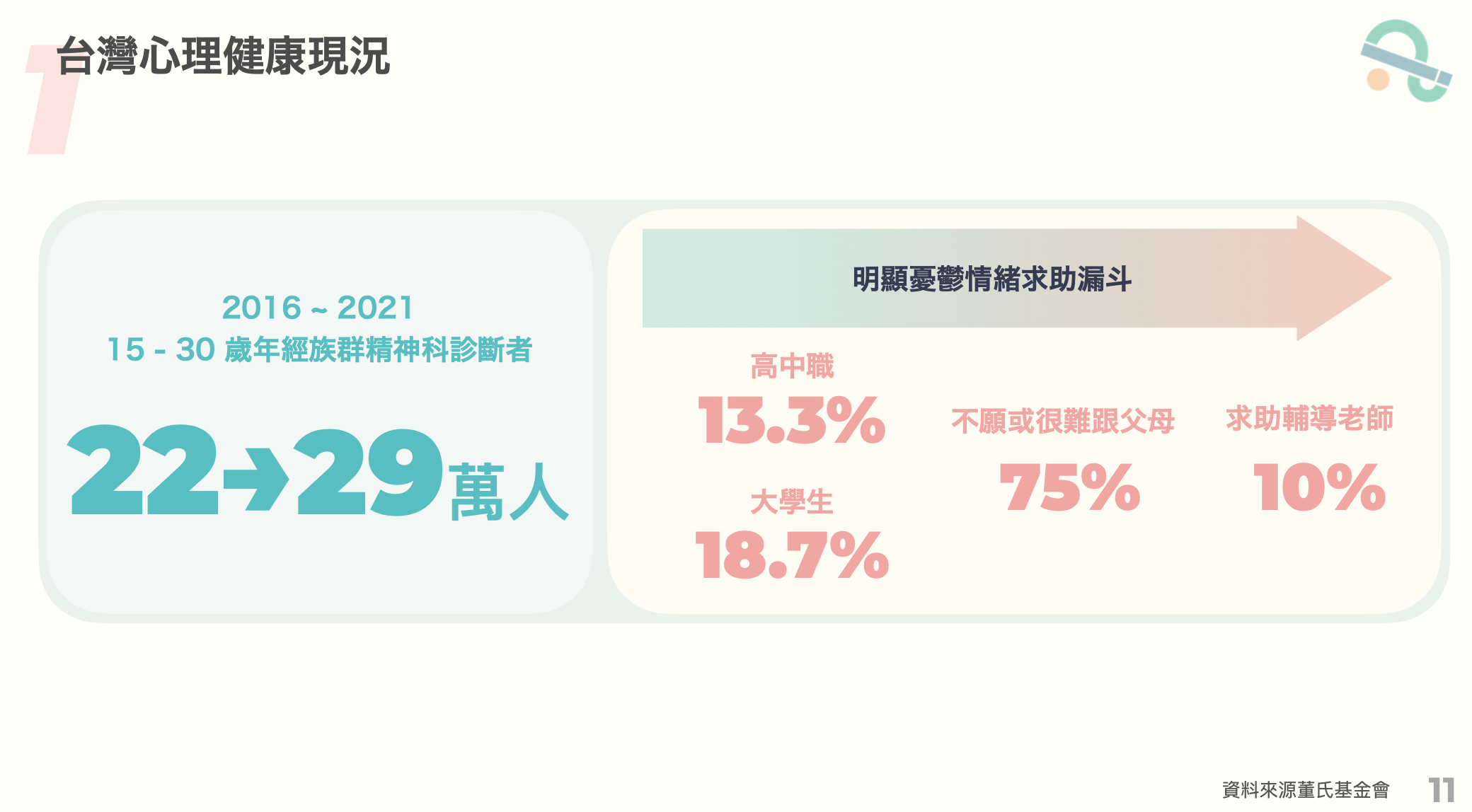
Between 2016–2021, psychiatric diagnoses among 15–30 year-olds grew from 220,000 to 290,000 — growth that cannot be ignored. Among high school and university students, 13–19% show significant depressive symptoms, but over 70% are unwilling to speak to parents, and only 10% proactively seek counselors.
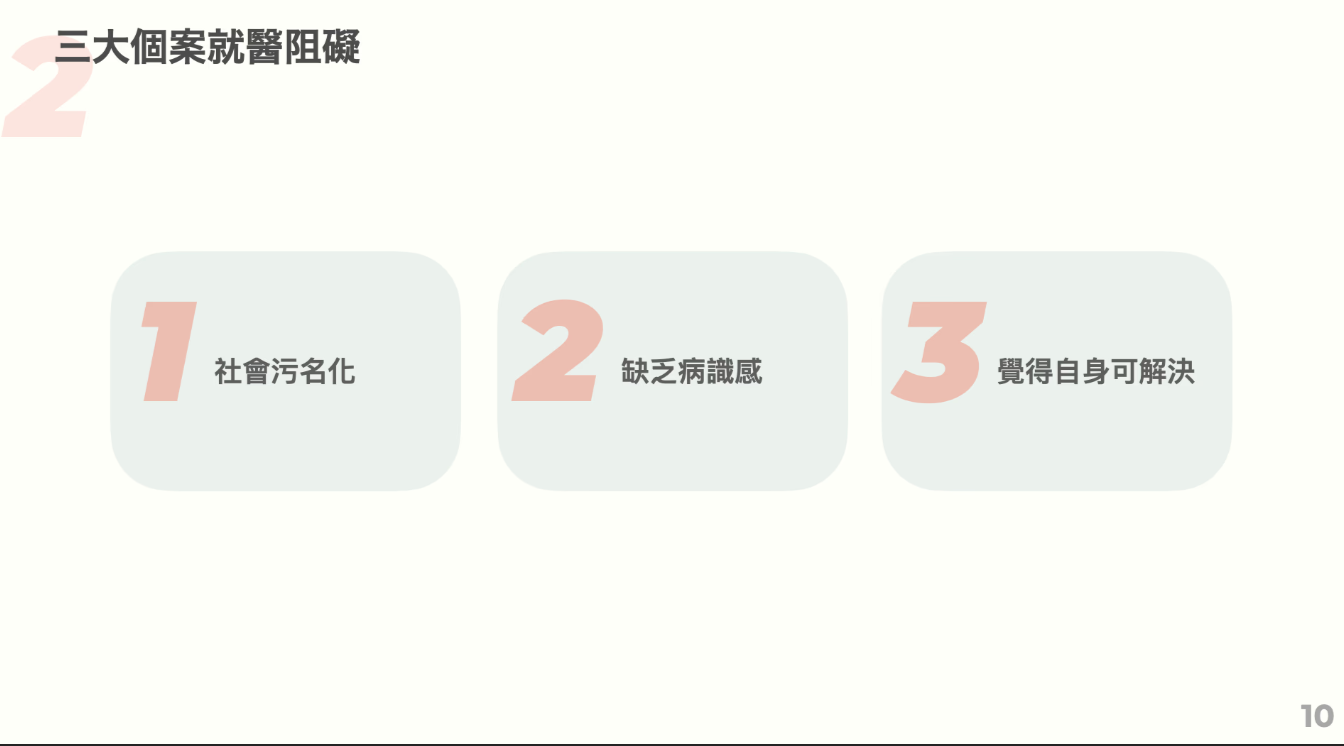
Barriers to youth help-seeking can be summarized as three intertwined psychological dilemmas: fear of social stigma, lack of illness awareness about one's own condition, and belief in being able to handle it alone. These three factors together create an insurmountable barrier, making it difficult for those who truly need help to take the first step.
II. Research Objectives & Product Positioning
Therapists Fighting Alone
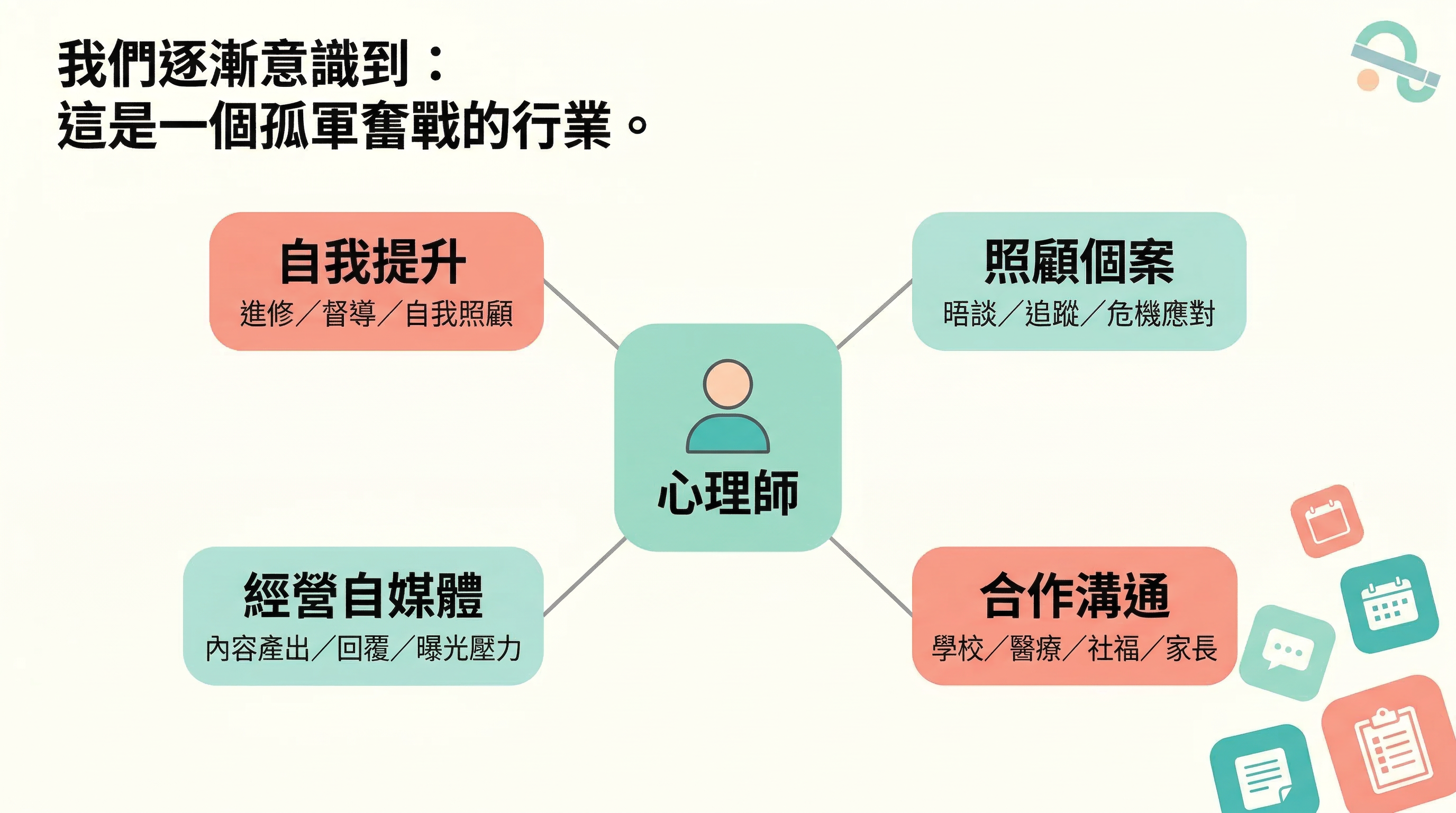
Through conversations, we gradually realized this is an industry of lone warriors. Therapists must simultaneously handle self-improvement, client care, communication with partner organizations, social media management, and rely on numerous scattered tools to complete tedious work.Tool fragmentation is quietly eroding the time and energy they can truly dedicate to clients.
Kokomo's Product Positioning
Based on these observations, Kokomo's core proposition is:
Your digital companion for therapy. Smart tools help deliver warmth where needed.
Kokomo is positioned as a B2B2C online matching platform, combining generative AI-assisted conversation and summary tools, aiming to consolidate therapists' tools in one place, simplify workflows, while providing the public with more convenient, affordable, and private psychological support channels.
III. Research Methods
Mixed Research Design
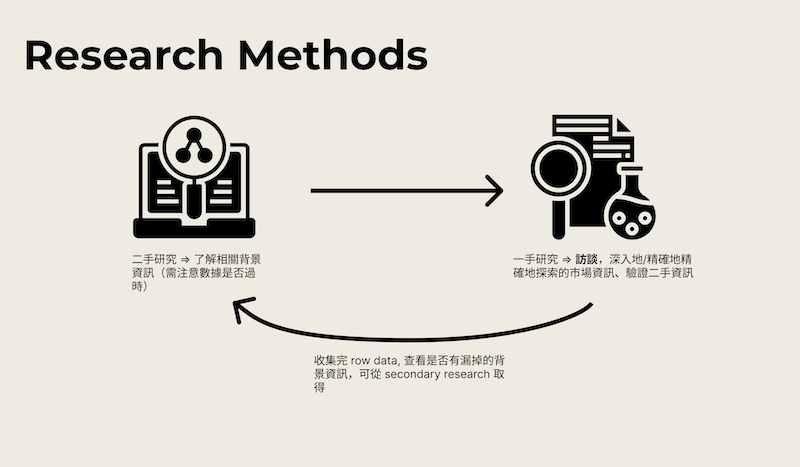
This research adopted a mixed-methods design, building background knowledge through secondary data and literature review, then validating hypotheses and uncovering deeper insights through primary interviews.
The interview plan centered on two axes: 'user problems' and 'business problems.' On the user side, we aimed to understand how clients find suitable therapists, what prevents them from seeking help, and how they self-manage emotions outside counseling hours. On the business side, we focused on how therapists effectively manage clients and the feasibility of tiered support mechanisms.
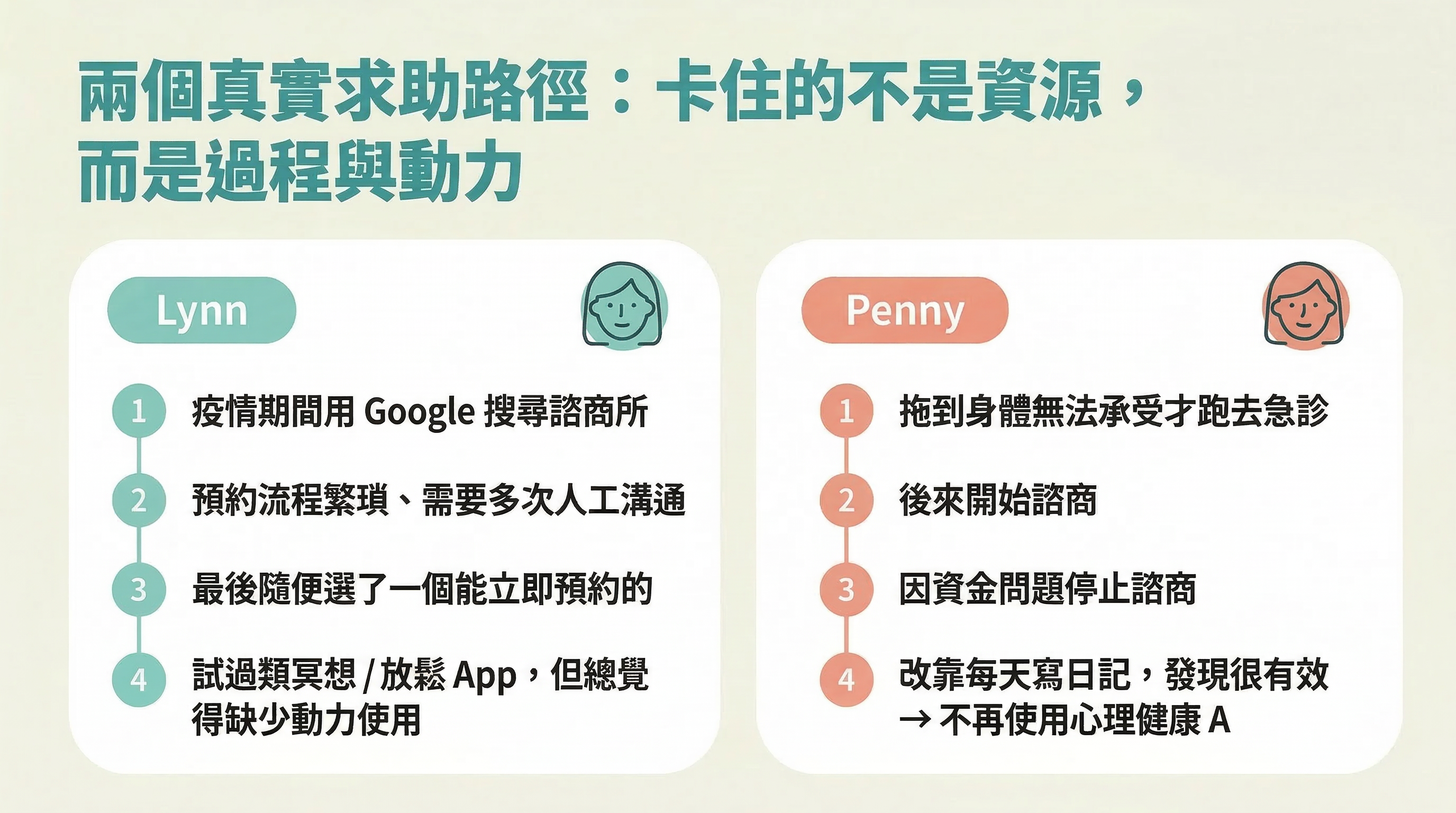
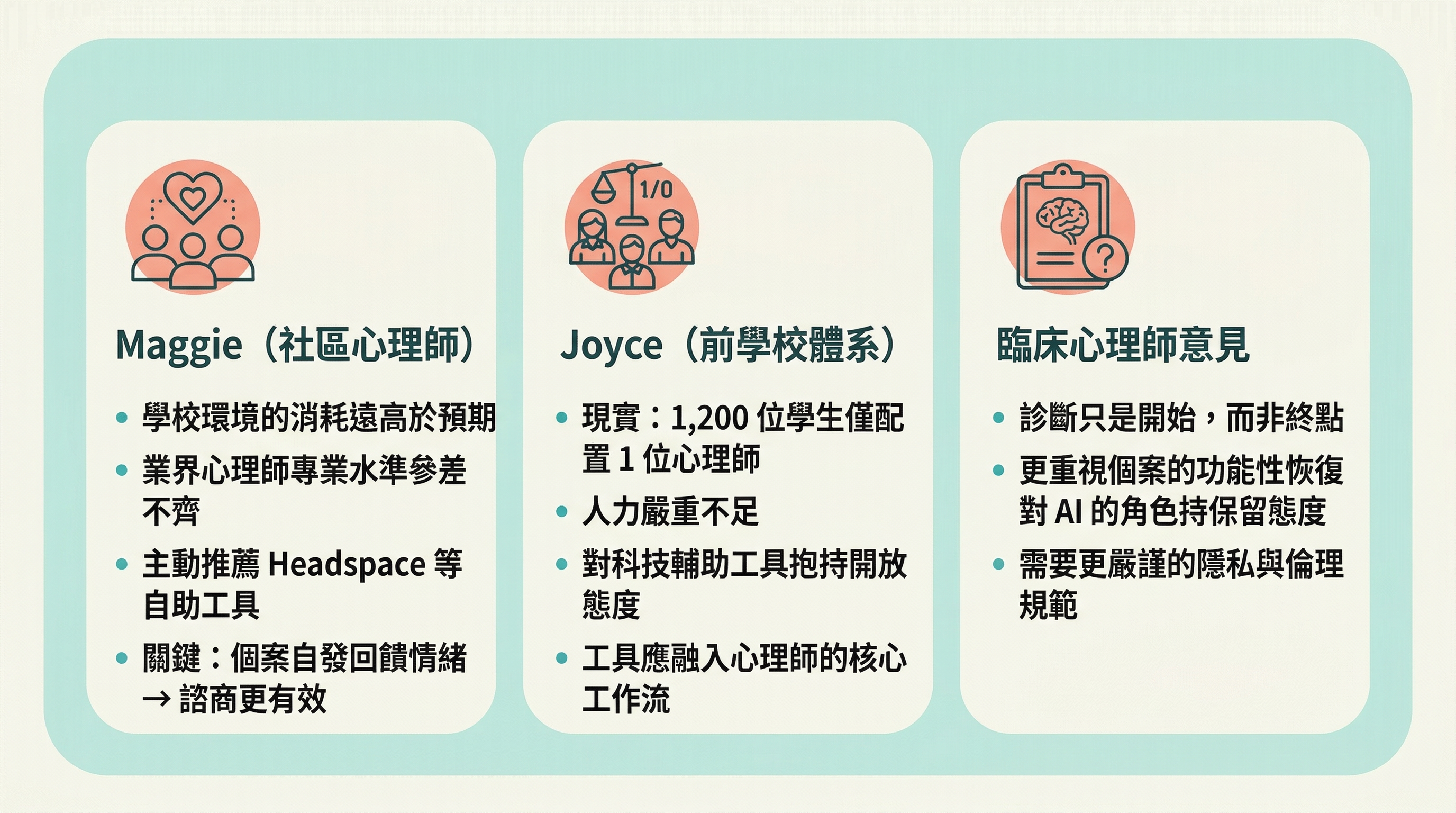
To obtain firsthand perspectives from both supply and demand sides, we interviewed two clients with counseling experience (Lynn, Penny) and three practicing counseling psychologists (AH, Maggie, Joyce).
Secondary Research Findings: Four Major Issues in Taiwan's Mental Health Care
Through literature review, we identified four structural problems facing Taiwan's mental health care: public hesitation in seeking professional psychological help, urban-rural imbalance in resource distribution, supply-demand mismatch between therapists and clients, and insufficient mental health advocacy.
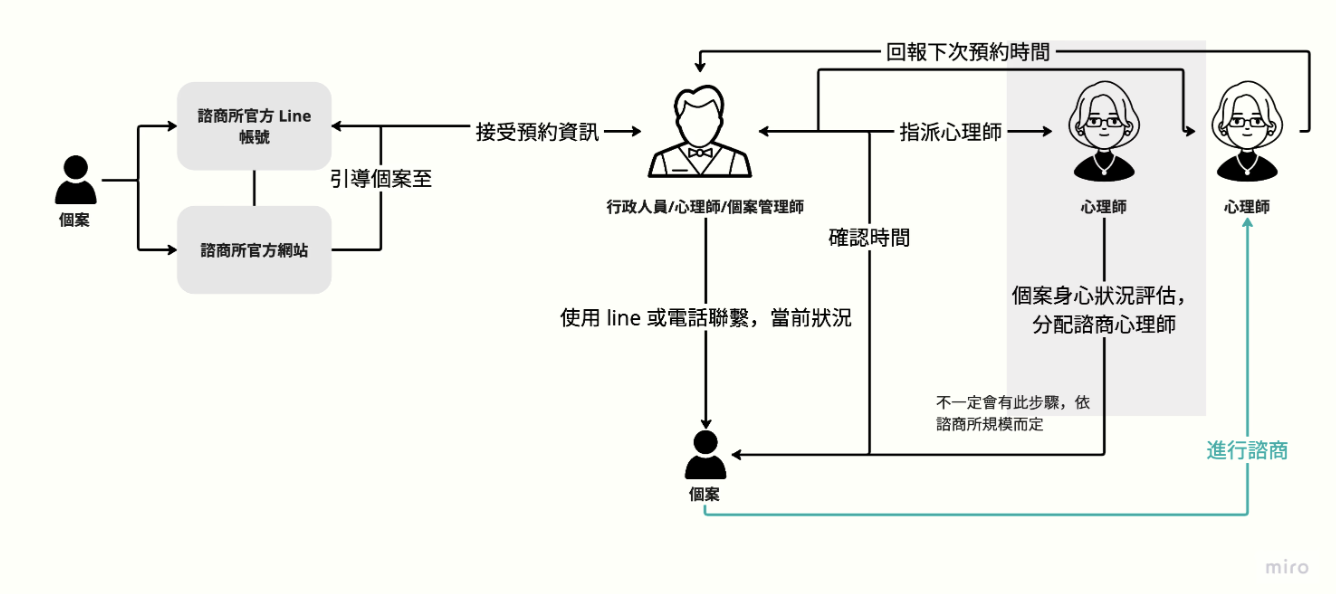
Current Counseling Appointment Process
The actual process of booking psychological counseling is far more complex than imagined:
- Query through the counseling center's official Line account or website
- Directed to administrative staff / therapist / case manager
- Contact via Line or phone to confirm time and current situation
- Assign therapist (may require additional assessment depending on center size)
- Conduct counseling session
- Report next appointment time (entering the next cycle)
The process is tedious, waiting times are long, and multiple communications are needed — these pain points were fully confirmed in client interviews.
IV. User Interviews
Client Side: Lynn and Penny
Therapist Side: Maggie, Joyce, and AH
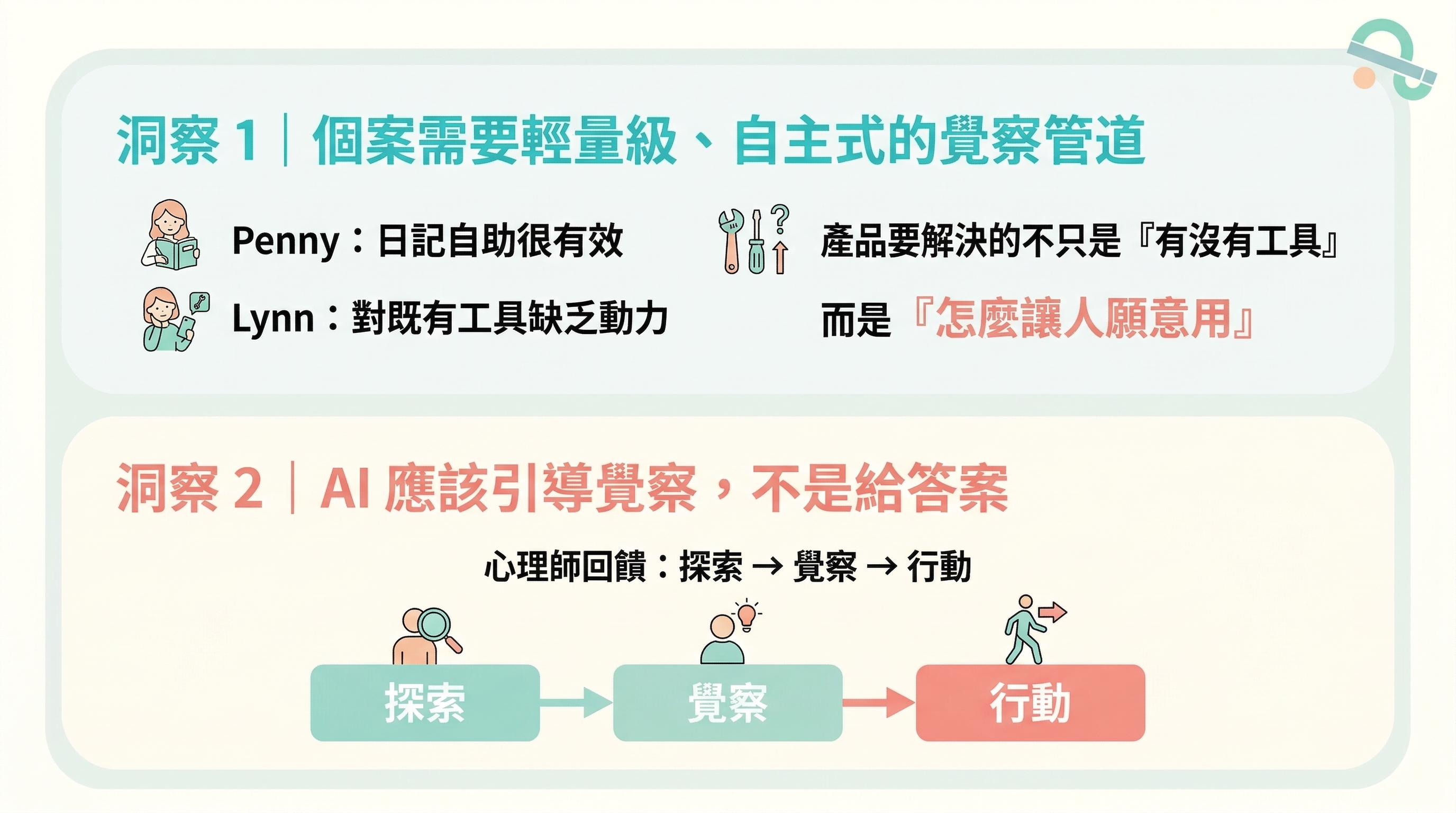
Insights from Both Sides
V. Research Findings
Information Clustering
Through interview data analysis, we organized therapist responses into six core themes: insufficient school counseling manpower, recommended self-help tools, uneven therapist quality, emphasis on client interaction, information security considerations, and AI chatbot application potential.
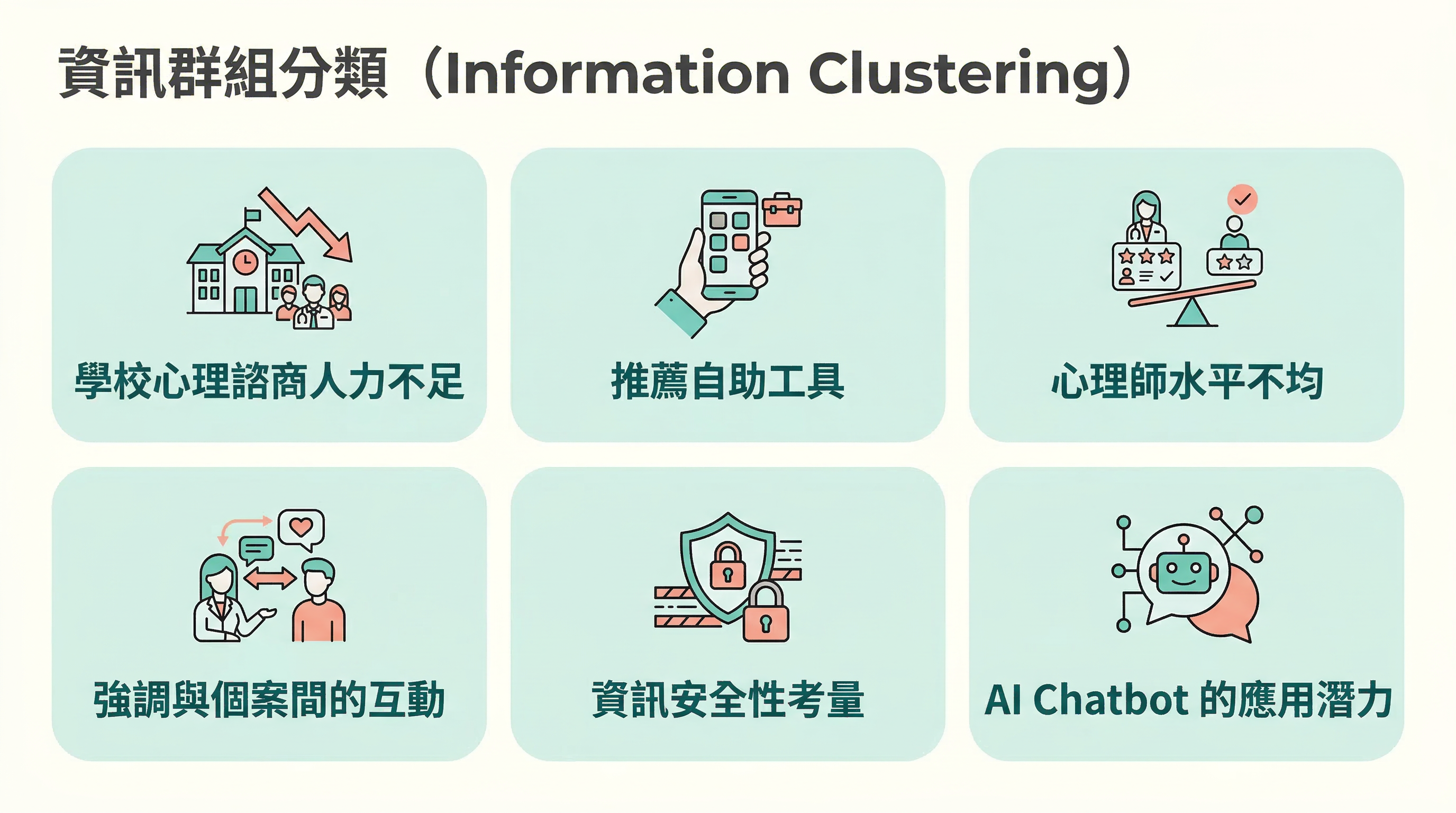
Insights Clustering
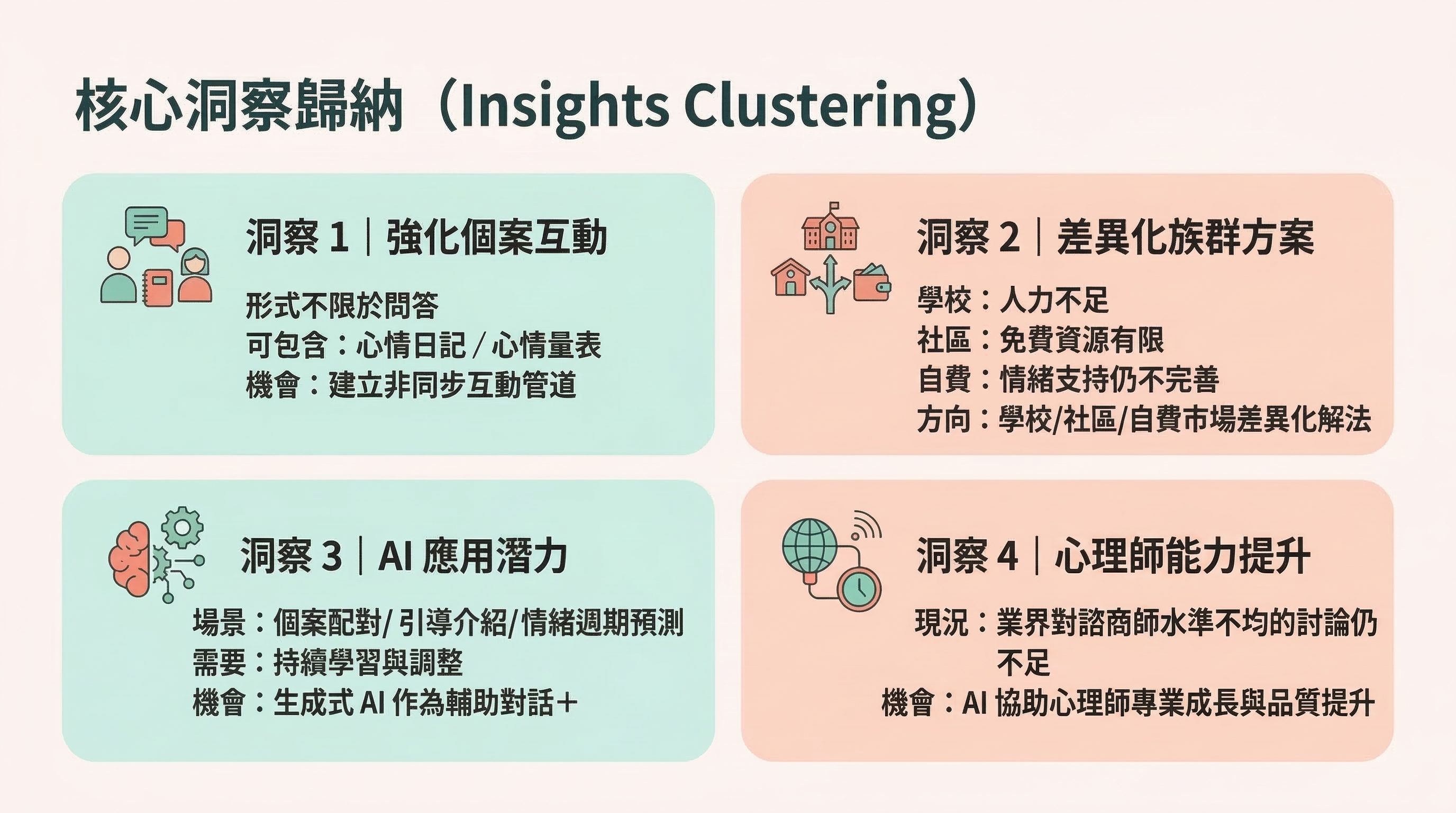
From the six information themes, we further distilled four core insight directions:
VI. Competitive Analysis
Existing Market Solutions
Product | Positioning | Core Features | Key Limitations |
|---|---|---|---|
Better Help | Counseling matching | Questionnaire-based therapist matching; text, phone, video counseling | Questionnaire matching is reference only; marketplace data is broad but limited in precision |
FarHugs | Counseling matching | Various topic courses, direct counseling booking | Must compare therapists manually; booking process time-consuming; some integrated features non-functional |
Youper | AI emotion monitoring | Emotion recording and tracking, similar to Wysa |
Market Gap
Most existing products focus on two endpoints: 'matching' or 'client self-help,' but rarely address the need for ongoing connection between clients and therapists. This is precisely the core space where Kokomo can intervene.
VII. Research Application: Product Direction
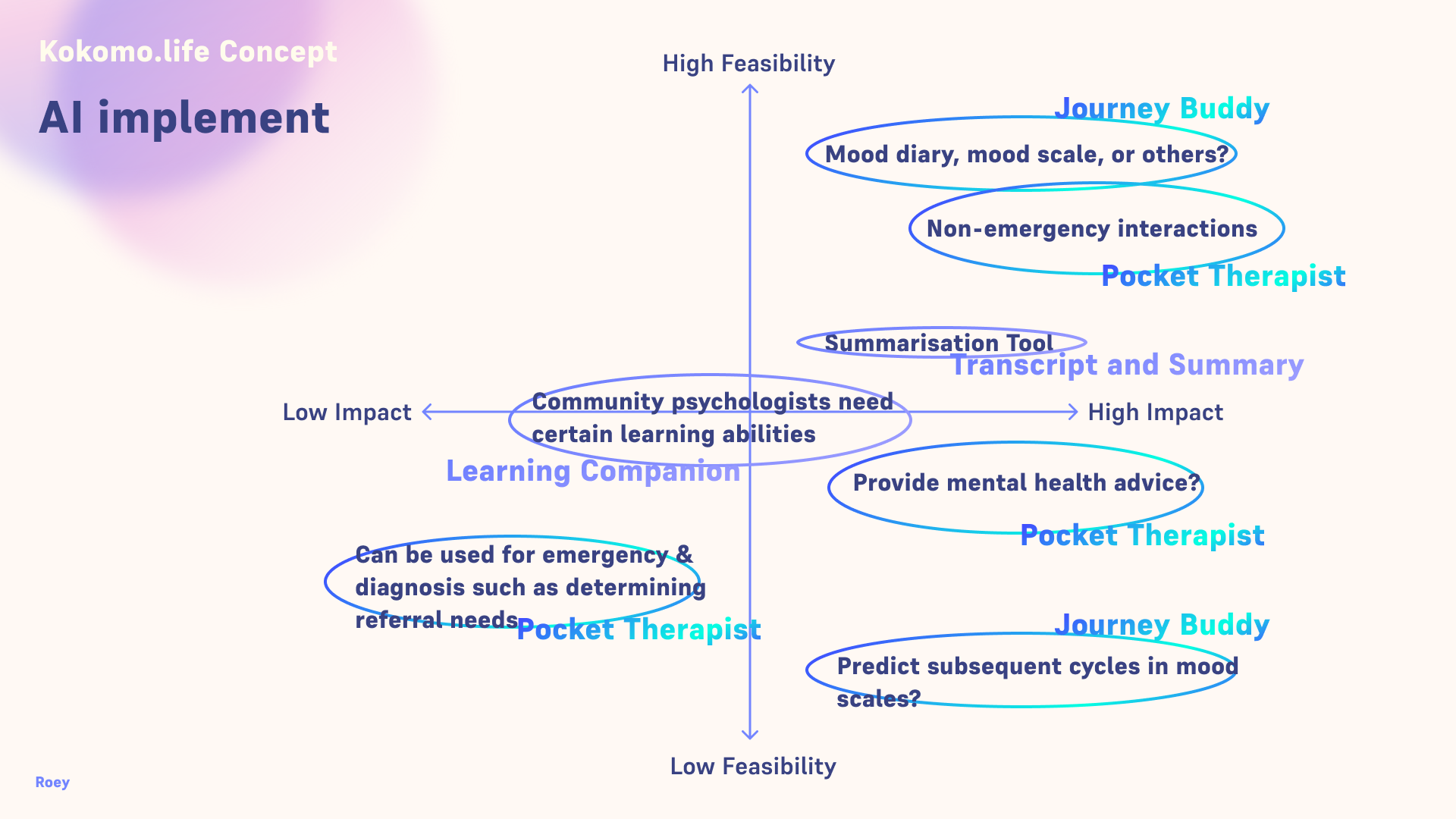
Based on four research insights, we proposed four core AI features and prioritized them by 'feasibility' and 'impact.'
Journey Buddy and Pocket Therapist were prioritized for development due to their combination of high impact and high implementation feasibility. Transcript and Summary and Learning Companion are technically easier to implement but have relatively limited short-term impact, belonging to subsequent incremental development.
For Patients: Client-Side Tools
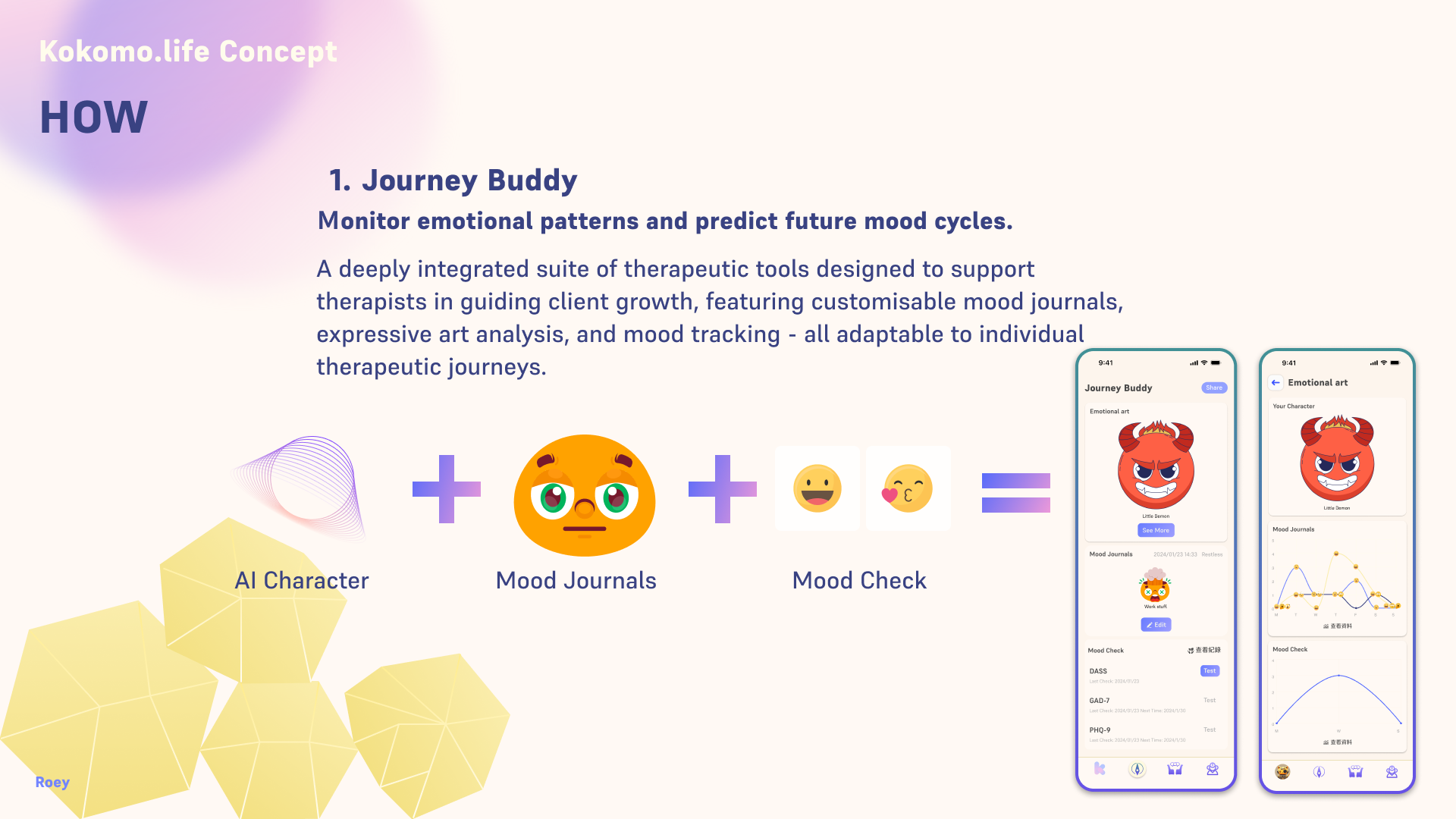
1. Journey Buddy
Monitor emotional patterns and predict future mood cycles
Design Context: Responding to core interview findings — Lynn lacked motivation to use tools, while Penny's self-help journaling was effective. Journey Buddy attempts to solve both: making emotion recording engaging and genuinely useful.
Core Features:
AI companion character (personalized emotional companion), customized mood journal (emoji + visual charts), emotion detection (predicting possible emotional cycles), and expressive art analysis for creative self-expression.
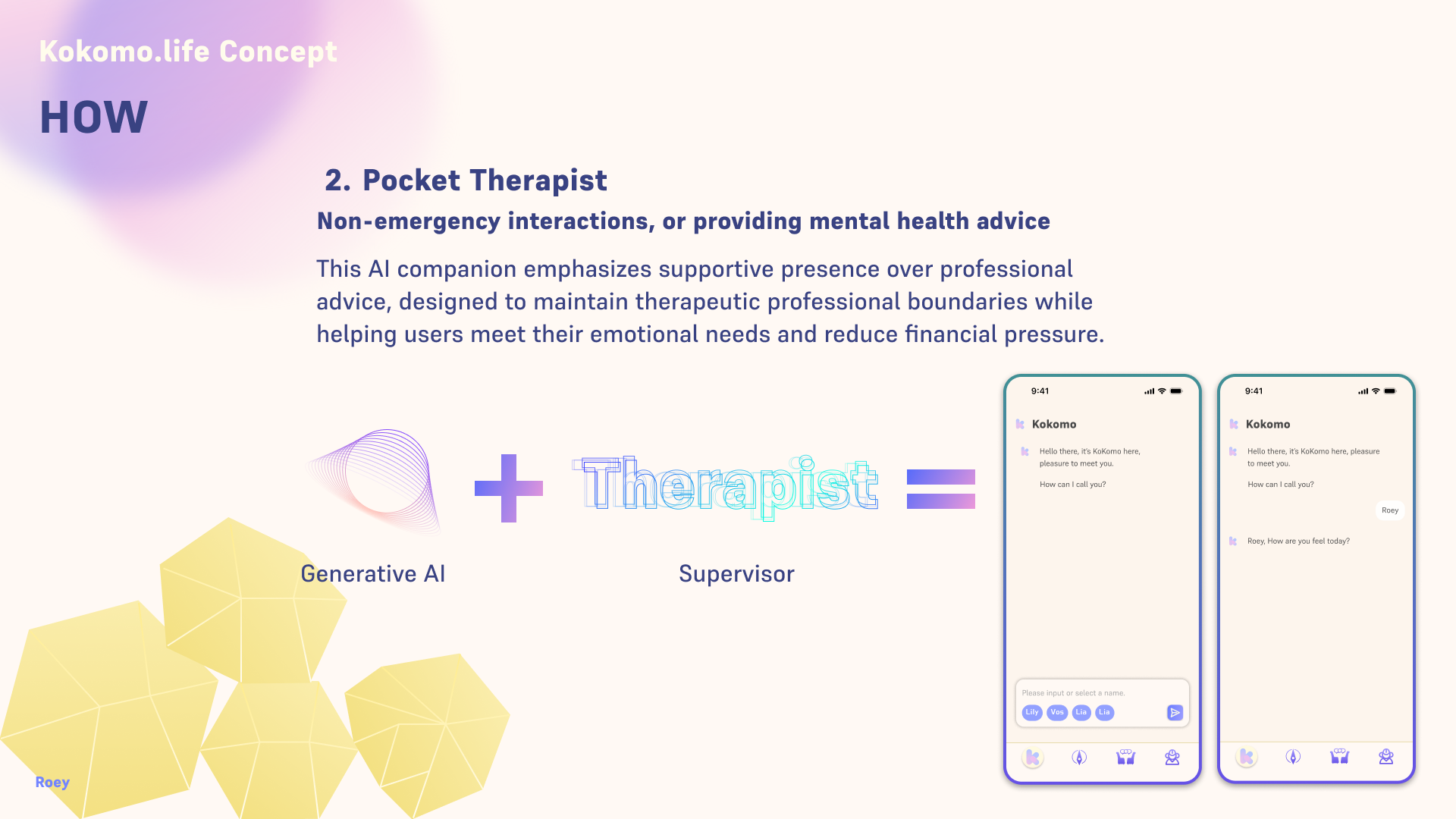
2. Pocket Therapist
Non-emergency interactions, or providing mental health advice
Design Context: With only 30% of cases in Taiwan receiving treatment, Pocket Therapist aims to lower barriers to care and provide 24/7 emotional support — within professional boundaries.
Core Features:
Combining generative AI with supervision experience, centered on 'supportive companionship' — not providing direct treatment advice, but helping users gain emotional support in daily life through gentle conversations. Maintaining clear professional boundaries is both the design premise and the most important ethical consideration.
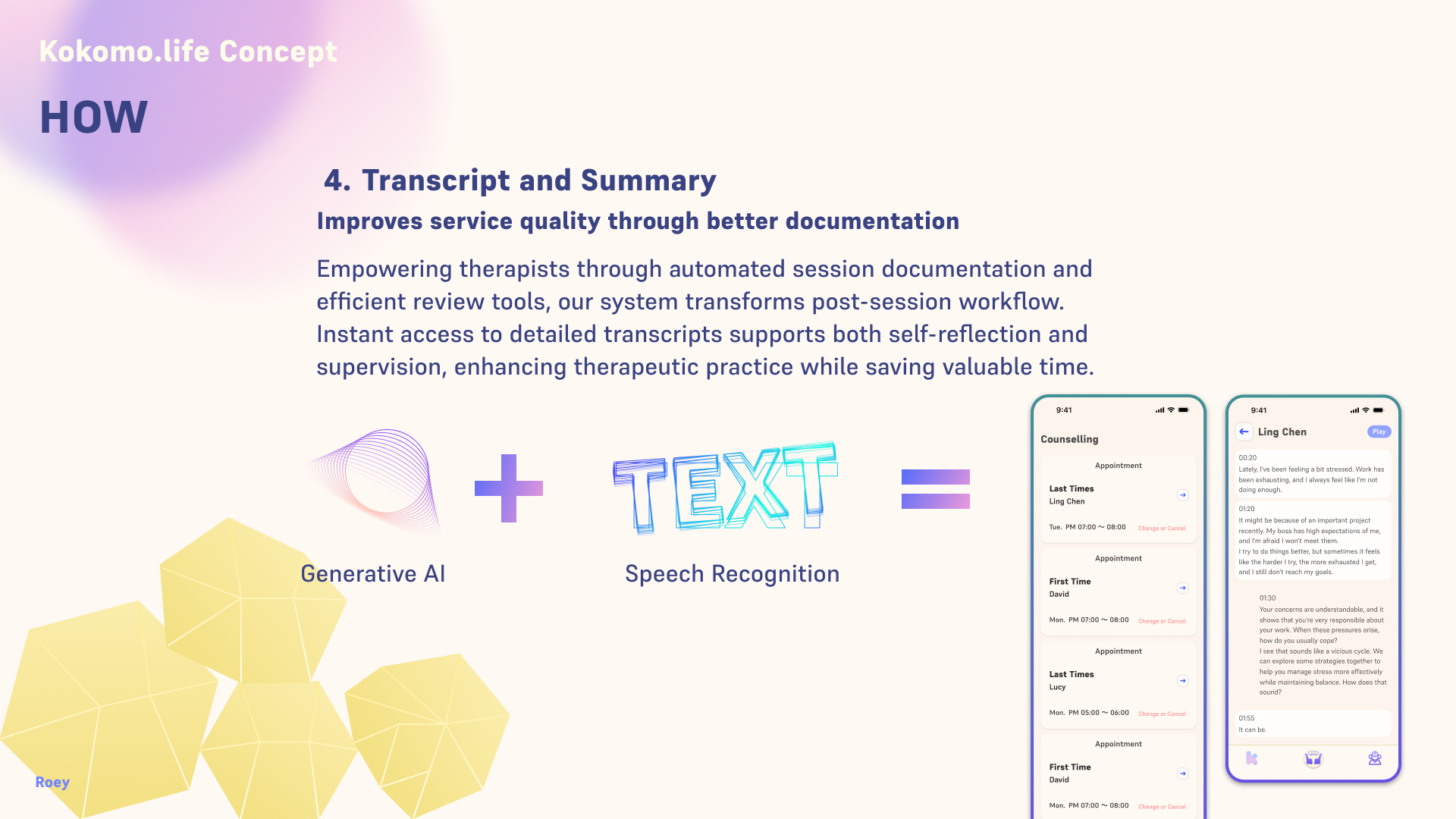
For Therapists: Therapist-Side Tools
3. Transcript and Summary
Improves service quality through better documentation
Design Context: Therapists spend significant time on administrative work. Transcript and Summary aims to return that time to clients.
Core Features:
Combining generative AI with speech recognition, automatically generating detailed session records, structured summaries, and supporting therapists' self-reflection and supervision needs.
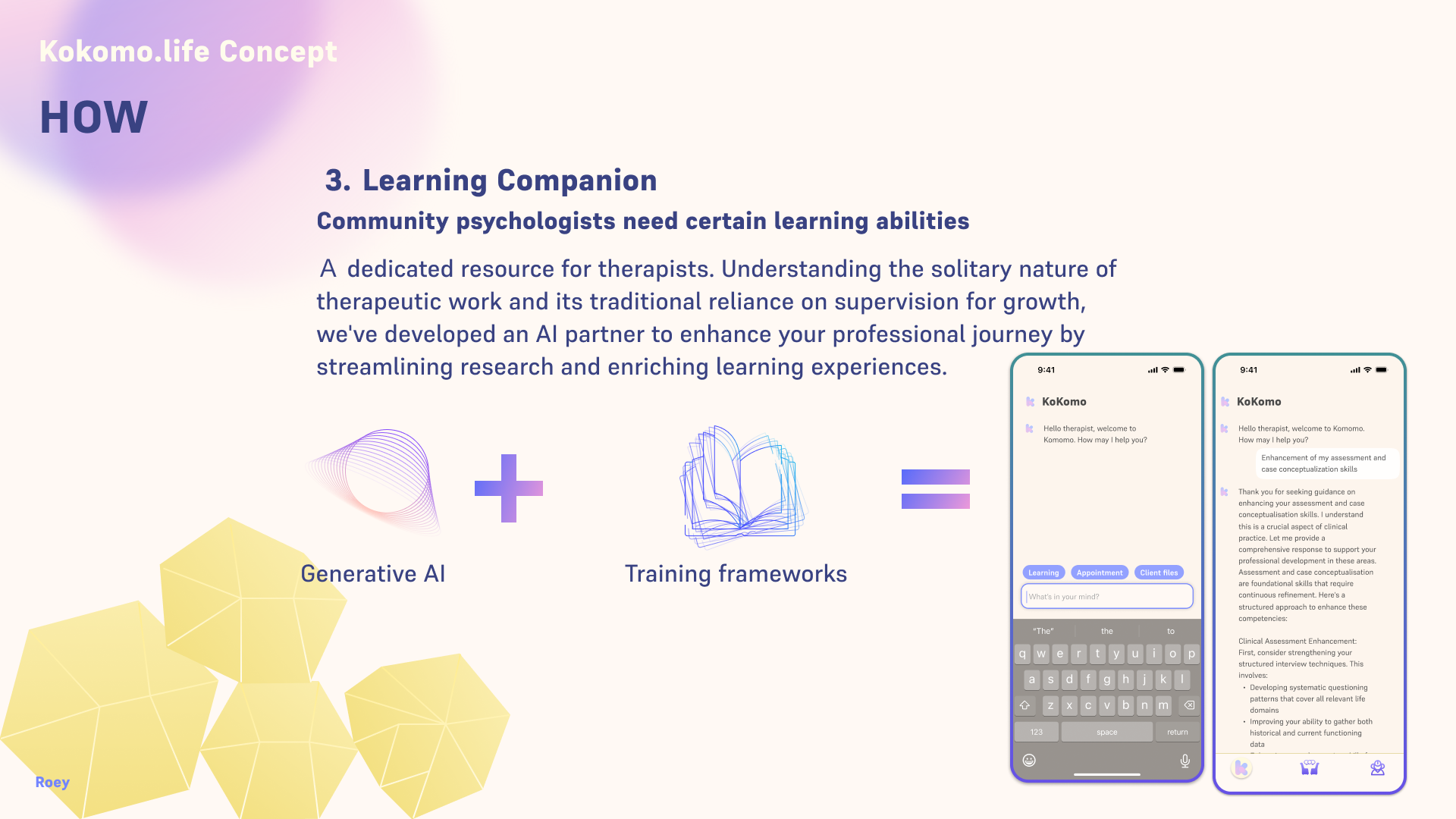
4. Learning Companion
Community psychologists need certain learning abilities
Design Context: Responding to the 'uneven therapist quality' insight, helping therapists achieve continuous professional growth.
Core Features:
Combining generative AI with professional training frameworks to help therapists strengthen assessment skills, provide systematic consultation assistance, and help collect client history and current situation data.
Applicable Scenarios for Generative AI
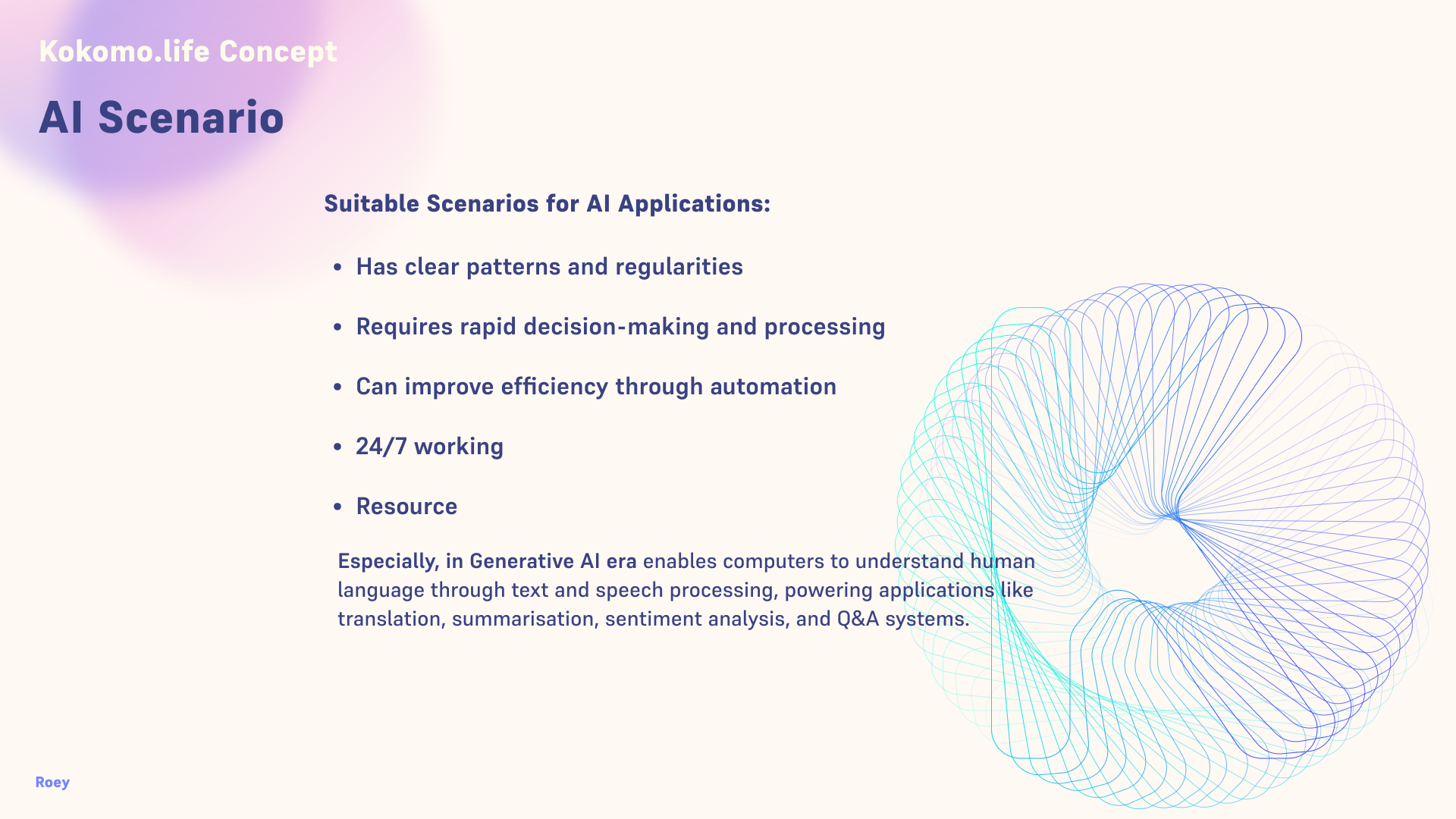
Generative AI delivers the most value in scenarios with clear patterns, requiring rapid decision processing, and where automation can improve efficiency. In mental health, this means AI can — without replacing humans — support translation, session summaries, emotion analysis, and Q&A systems through 24/7 voice and text processing capabilities, truly returning therapists' time to their clients.
VIII. Design Challenges & Reflection
Learning Research Methods
"Every Research is only as good as their research plan. This plan includes all the areas you'll want to explore during your research and the various methods you'll use."
— Brad Nunnally & David Farkas, UX Research: Practical Techniques for Designing Better Products
The biggest challenge of this research wasn't the interviews themselves, but the question design beforehand. Since clear product requirements hadn't been established at this stage, interviews weren't requirement validation but open exploration — in this context, defining what constitutes a 'good question' was harder than ever.
This also deepened our understanding: the thoroughness of secondary research directly determines how deep primary interviews can dig. Without sufficient background knowledge, meaningful hypotheses can't be formed; without hypotheses, interviews easily become aimless conversations.
Personal Learning
This research gave me concrete growth in three dimensions.
In user research methods, I learned mixed research design logic, interview question design techniques, and the essential difference between Information Clustering and Insights Clustering — the former is data categorization, the latter is meaning interpretation.
In mental health domain knowledge, I gained deep understanding of Taiwan's psychological counseling ecosystem, the bilateral real needs of clients and therapists, and the multi-layered factors hindering help-seeking. This knowledge provided essential foundational support for subsequent product design.
In AI product thinking, I explored the application boundaries of generative AI in sensitive domains, learned how to balance ethics with functionality, and how to make convincing feature prioritization decisions using a 'feasibility × impact' matrix.
References
- For the People on Taiwan, Mental Health Care is Now Just a Tap Away
- Barriers to Professional Mental Health Help-Seeking Among Chinese Adults: A Systematic Review
- Combating stigmas in Taiwan about mental health
- National Health Research Institutes 2022 Study: Exploring Current Status and Issues of Depression Care for Middle-aged and Elderly in Taiwan
- John Tung Foundation Youth Depression Survey